



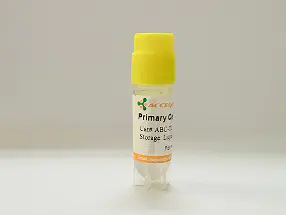
For research use only
| Cat No. | ABC-TC4018 |
| Product Type | Renal Cells |
| Cell Type | Kidney Cell |
| Species | Human |
| Growth Conditions | 37 ℃, 5% CO2 |
| Source Organ | Kidney |
| Disease | Normal |
| Storage | Liquid Nitrogen |
Human Peri-renal Pericytes support microvascular studies involving endothelial interaction, vascular stability, and kidney-specific pericyte functionality.
Human Peri-renal cells are isolated from the perirenal adipose tissue surrounding the kidneys and are cryopreserved following primary culture. These cells play a critical role in metabolic regulation, endocrine signaling, and immune modulation within the renal microenvironment. They are involved in the secretion of adipokines and cytokines that influence renal physiology and systemic metabolic responses. Human Peri-renal cells are widely studied for their contributions to chronic kidney disease, obesity-related renal complications, and renal fibrosis. Their functional behavior provides valuable insights into adipose-renal crosstalk. These cells display limited proliferative capacity in vitro and should be handled carefully to avoid repeated freeze-thaw cycles. The cells undergo rigorous screening and isolation procedures, and are rigorously tested to ensure they are free of contamination from HIV-1, HBV, HCV, Syphilis, Mycoplasma, Fungi, Yeast, and Bacteria.
| Product Code | Human Peri-renal Cells, Perirenal Tissue Cells, Renal Surrounding Tissue Cells |
| Species | Human |
| Cat.No | ABC-TC4018 |
| Product Category | Primary Cells |
| Size/Quantity | 1 vial |
| Cell Type | Kidney Cell |
| Growth Mode | Adherent |
| Shipping Info | Dry Ice |
| Growth Conditions | 37 ℃, 5% CO2 |
| Source Organ | Kidney |
| Disease | Normal |
| Biosafety Level | 1 |
| Storage | Liquid Nitrogen |
| Product Type | Renal Cells |
| Quality Control | All cells test negative for mycoplasma, bacteria, yeast, and fungi. |
Human Peri-renal cells can be used as an in vitro model to study renal perivascular biology, fibrosis, and inflammation in metabolic and chronic kidney diseases. These cells help investigate cellular cross-talk in the kidney microenvironment, especially in processes like extracellular matrix remodeling, angiogenesis, and immune cell infiltration. They are also useful in modeling perivascular adipose tissue responses and their contribution to renal injury or protection under pathological stimuli, supporting translational research on kidney function and therapy.
When you publish your research, please cite our product as “AcceGen Biotech Cat.# XXX-0000”. In return, we’ll give you a $200 coupon. Simply click here and submit your paper’s PubMed ID (PMID).