



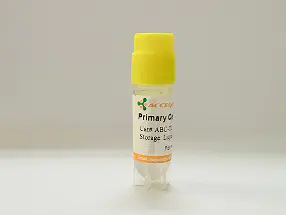
For research use only
| Cat No. | ABC-TC4255 |
| Product Type | Blood Products |
| Cell Type | Plasma |
| Species | Human |
| Growth Conditions | 37 ℃, 5% CO2 |
| Source Organ | Peripheral Blood |
| Disease | Systemic Lupus Erythematosus |
| Storage | Liquid Nitrogen |
Systemic Lupus Erythematosus (SLE) peripheral blood plasma is obtained by centrifugation of the SLE PB.
Human SLE PB Plasma is derived from the peripheral blood of human donors diagnosed with systemic lupus erythematosus (SLE), an autoimmune disease. This plasma is isolated via centrifugation of whole blood immediately after collection and cryopreserved. Functionally, it is valuable for studying SLE pathogenesis, including immune complex deposition, tissue damage, and systemic inflammation. It shows high levels of ANAs and anti-dsDNA antibodies. Each lot undergoes rigorous screening and isolation procedures, and is rigorously tested to ensure it is free of contamination from HIV-1, HBV, HCV, Syphilis, Mycoplasma, Fungi, Yeast, and Bacteria.
| Product Code | Human SLE PB Plasma, Human SLE Plasma, Lupus Plasma |
| Species | Human |
| Cat.No | ABC-TC4255 |
| Product Category | Primary Cells |
| Size/Quantity | 1 vial |
| Cell Type | Plasma |
| Shipping Info | Dry Ice |
| Growth Conditions | 37 ℃, 5% CO2 |
| Source Organ | Peripheral Blood |
| Disease | Systemic Lupus Erythematosus |
| Biosafety Level | 1 |
| Storage | Liquid Nitrogen |
| Product Type | Blood Products |
| Quality Control | All cells test negative for mycoplasma, bacteria, yeast, and fungi. |
Human SLE PB Plasma can be used as an in vitro model to study systemic lupus erythematosus (SLE) pathogenesis, including autoimmunity and organ damage. For example, by investigating molecular pathways involving autoantibodies, immune complexes, and cytokine dysregulation, Human SLE PB Plasma provides a better understanding of plasma-mediated immune dysfunction and pathological changes, aiding in exploring SLE treatments.
When you publish your research, please cite our product as “AcceGen Biotech Cat.# XXX-0000”. In return, we’ll give you a $200 coupon. Simply click here and submit your paper’s PubMed ID (PMID).