



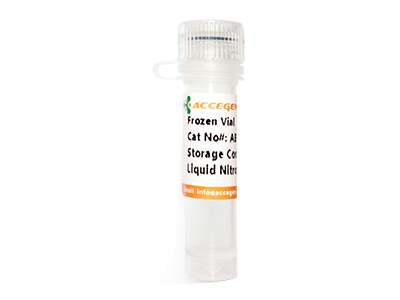
For research use only
| Cat No. | ABC-TC3870 |
| Product Type | Female Reproductive Cells |
| Cell Type | Trophoblast |
| Species | Human |
| Growth Conditions | 37 ℃, 5% CO2 |
| Source Organ | Villous |
| Disease | Normal |
| Storage | Liquid Nitrogen |
Human Villous Trophoblasts (HVT) are placental progenitors mediating nutrient exchange, hormone secretion,expressing CXCR4/CCR5,limited culture expansion.
Human villous trophoblasts (HVT) are primary placental epithelial cells isolated from the chorionic villi of human term or first-trimester placentas, typically obtained from healthy pregnancies. The cells are cryopreserved at early passages and are not recommended for long-term expansion due to their limited proliferative capacity. These cells include cytotrophoblasts and syncytiotrophoblasts, which are essential for placental development and maternal-fetal nutrient exchange. They exhibit epithelial morphology and express key trophoblast markers such as cytokeratin-7 (CK7), human chorionic gonadotropin (hCG), placental alkaline phosphatase (PLAP), and syncytin-1. Functionally, HVT play pivotal roles in hormone production, immune modulation, and trophoblast invasion during early pregnancy. These characteristics position HVT as a critical model for studying placental development and gestational pathologies. Their dysfunction is associated with pregnancy-related disorders such as preeclampsia, intrauterine growth restriction (IUGR), and spontaneous abortion. These cells provide a physiologically relevant model for studying placental development, maternal-fetal signaling, and the effects of hypoxia or environmental toxins on pregnancy outcomes.
| Species | Human |
| Cat.No | ABC-TC3870 |
| Product Category | Primary Cells |
| Size/Quantity | 1 vial |
| Cell Type | Trophoblast |
| Growth Mode | Adherent |
| Shipping Info | Dry Ice |
| Growth Conditions | 37 ℃, 5% CO2 |
| Source Organ | Villous |
| Disease | Normal |
| Biosafety Level | 1 |
| Storage | Liquid Nitrogen |
| Product Type | Female Reproductive Cells |
| Quality Control | All cells test negative for mycoplasma, bacteria, yeast, and fungi. |
Human villous trophoblasts offer versatile applications in scientific research. They serve as an ideal cellular platform for investigating cell differentiation and organogenesis while also support the development of disease models for high-throughput and high-content screening. These cells are invaluable for researchers studying the molecular mechanisms underlying human placental development and pathology, helping to illuminate key events in placental morphogenesis and trophoblast regulation within the villous environment.
When you publish your research, please cite our product as “AcceGen Biotech Cat.# XXX-0000”. In return, we’ll give you a $200 coupon. Simply click here and submit your paper’s PubMed ID (PMID).
During initial isolation, fibroblasts are preferentially removed using differential adhesion techniques, as they attach faster than trophoblasts. Specialized culture media supports the selective growth of trophoblasts, and further purification via differential digestion is performed in later culture stages to ensure high cell purity.
Human villous trophoblasts exhibit limited proliferation, typically maintained for 1–3 passages.