



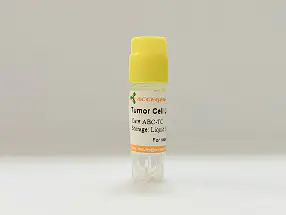
For research use only
| Cat No. | ABC-TC0452 |
| Product Type | Human Uterine Cancer Cell Lines |
| Cell Type | Epithelial |
| Species | Human |
| Growth Conditions | 37 ℃, 5% CO2 |
| Source Organ | Cervix |
| Disease | Cervix Cancer |
| Product Code | intestine 407; Intestine-407; intestine-407; INT 407; Int 407; INT-407; Int-407; Int407; INT407; INT 407(HeLa derivative); HI407; Henle-407; HEI |
Intestine 407 cell line serves as a human intestinal epithelial model for studies on barrier function, pathogen interaction, and cellular signaling.
Intestine 407 was originally thought to be a human embryonic intestinal epithelial cell line derived from jejunum and ileum tissue of a 2-month-old Caucasian embryo and exhibited epithelial-like morphology with adherent growth in culture. However, subsequent authentication studies showed that this line is misidentified and is a derivative of HeLa cervical carcinoma cells, containing HeLa marker chromosomes and genetic profiles indistinguishable from HeLa, rather than true normal intestinal origin. Intestine 407 cell line has been widely used historically in studies of intestinal physiology, membrane potential responses, bacterial interaction models, and enteric viral susceptibility due to their epithelial characteristics. The cells undergo rigorous screening and isolation procedures, and are rigorously tested to ensure they are free of contamination from HIV-1, HBV, HCV, Syphilis, Mycoplasma, Fungi, Yeast, and Bacteria.
| Product Code | intestine 407; Intestine-407; intestine-407; INT 407; Int 407; INT-407; Int-407; Int407; INT407; INT 407(HeLa derivative); HI407; Henle-407; HEI |
| Species | Human |
| Cat.No | ABC-TC0452 |
| Product Category | Tumor Cell Lines |
| Size/Quantity | 1 vial |
| Cell Type | Epithelial |
| Growth Mode | Adherent |
| Shipping Info | Dry Ice |
| Growth Conditions | 37 ℃, 5% CO2 |
| Source Organ | Cervix |
| Disease | Cervix Cancer |
| Biosafety Level | 1 |
| Storage | Liquid Nitrogen |
| Product Type | Human Uterine Cancer Cell Lines |
Intestine 407 cells are employed as an in vitro epithelial cancer cell model representing HeLa-derived tissue for studies of epithelial cell signaling, pathogen host-cell interactions, and membrane transporter function. They are used in infection models, receptor and ion channel physiology assays, and pharmacological studies relevant to epithelial-derived tumor behavior.
When you publish your research, please cite our product as “AcceGen Biotech Cat.# XXX-0000”. In return, we’ll give you a $200 coupon. Simply click here and submit your paper’s PubMed ID (PMID).