



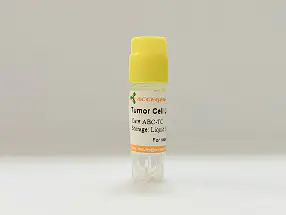
For research use only
| Cat No. | ABC-TC0485 |
| Product Type | Human Thyroid Cancer Cell Lines |
| Cell Type | Epithelial |
| Species | Human |
| Growth Conditions | 37 ℃, 5% CO2 |
| Source Organ | Thyroid |
| Disease | Thyroid Cancer |
| Product Code | K-1 |
Human thyroid carcinoma. Derived from a primary papillary thyroid carcinoma. Retains thyroid follicular cell differentiation e.G. Thyroglobulin synthesis.
K1 is a human papillary thyroid carcinoma cell line derived from primary papillary thyroid carcinoma tissue and retains features of thyroid follicular cell differentiation, including thyroglobulin synthesis, with detectable thyroglobulin expression under defined culture conditions, and expression of a wild-type p53 tumor suppressor gene. It is synonymous with the GLAG‑66 lineage and has been widely characterized for epithelial morphology and tumor biology in vitro. Molecular profiling shows that K1 harbors oncogenic alterations such as heterozygous BRAF^V600E, which is relevant to thyroid oncogenesis and genomic studies. K1 cells are adherent and are used broadly as a representative model of differentiated thyroid cancer in endocrinology and oncology research. Evidence for metastatic behavior in vivo is not a defining characteristic. The cells undergo rigorous screening and isolation procedures, and are rigorously tested to ensure they are free of contamination from HIV‑1, HBV, HCV, Syphilis, Mycoplasma, Fungi, Yeast, and Bacteria.
| Product Code | K-1 |
| Species | Human |
| Cat.No | ABC-TC0485 |
| Product Category | Tumor Cell Lines |
| Size/Quantity | 1 vial |
| Cell Type | Epithelial |
| Growth Mode | Adherent |
| Shipping Info | Dry Ice |
| Growth Conditions | 37 ℃, 5% CO2 |
| Source Organ | Thyroid |
| Disease | Thyroid Cancer |
| Biosafety Level | 1 |
| Storage | Liquid Nitrogen |
| Product Type | Human Thyroid Cancer Cell Lines |
K1 is used as an in vitro human papillary thyroid carcinoma model for studies of tumor cell proliferation, signal transduction, and thyroid hormone‑related gene expression. It supports investigations into the molecular mechanisms of oncogenic drivers such as BRAF^V600E and downstream pathways, responses to targeted therapies, and modulation of migratory and invasive behaviors under hypoxic or drug‑treated conditions. K1 also serves in comparative studies against other PTC cell lines for biomarker identification and anticancer drug screening.
When you publish your research, please cite our product as “AcceGen Biotech Cat.# XXX-0000”. In return, we’ll give you a $200 coupon. Simply click here and submit your paper’s PubMed ID (PMID).