For research use only
| Cat No. | ABC-TC179D |
| Product Type | Human Acute Myeloid Leukemia Cell Lines |
| Species | Human |
| Growth Conditions | 37 ℃, 5% CO2 |
| Source Organ | Peripheral Blood |
| Disease | Acute Myeloid Leukemia |
| Product Code | OCI-Aml-3; OCI/AML-3; OCI-AML-3; OCI/AML3; OCI AML3; OCIAML3 |
OCI-AML3: Human AML (FAB M4) cell line. Lymphoblast-like, suspension, hyperdiploid. Features NPM1 & DNMT3A mutations.
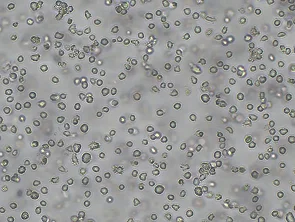
OCI-AML3 is a human acute myeloid leukemia (AML) cell line established in 1987 from the peripheral blood of a 57-year-old male AML patient. These cells grow in suspension and predominantly exhibit round, lymphoblast-like morphology. OCI-AML3 features a hyperdiploid karyotype, with chromosome counts typically ranging from 45 to 50, centered around a stemline of 48 chromosomes. A defining characteristic of this cell line is the type A mutation in the nucleophosmin 1 (NPM1) gene, a nucleolar protein crucial for ribosome biogenesis, DNA repair, and apoptosis regulation. The NPM1 mutation is a key biomarker and driver mutation in AML pathogenesis. Due to its well-characterized genetic background and stable growth, OCI-AML3 serves as a valuable model for investigating AML disease mechanisms, validating biomarkers, and evaluating targeted therapies against NPM1-mutated leukemia. Unlike Molm 13 cell line, which carries FLT3-ITD–driven leukemic features, OCI-AML3 represents an NPM1-mutated AML model with distinct molecular behavior.
| Product Code | OCI-Aml-3; OCI/AML-3; OCI-AML-3; OCI/AML3; OCI AML3; OCIAML3 |
| Species | Human |
| Cat.No | ABC-TC179D |
| Product Category | Tumor Cell Lines |
| Size/Quantity | 1 vial |
| Growth Mode | Suspension |
| Shipping Info | Dry Ice |
| Growth Conditions | 37 ℃, 5% CO2 |
| Source Organ | Peripheral Blood |
| Disease | Acute Myeloid Leukemia |
| Biosafety Level | 1 |
| Storage | Liquid Nitrogen |
| Product Type | Human Acute Myeloid Leukemia Cell Lines |
| Quality Control | All cells test negative for mycoplasma, bacteria, yeast, and fungi. |
The OCI-AML3 cell line is a valuable model for studying the biology of acute myeloid leukemia (AML) and the underlying molecular mechanisms, supporting the development of potential treatments such as cytotoxic chemotherapy and cell therapy. It is also commonly used to evaluate the efficacy of new drugs, aiding in the identification of promising therapeutic candidates.
When you publish your research, please cite our product as “AcceGen Biotech Cat.# XXX-0000”. In return, we’ll give you a $200 coupon. Simply click here and submit your paper’s PubMed ID (PMID).
1. The recommended culture medium for OCI-AML3 is RPMI 1640 + 20%FBS.
Preheat the complete culture medium in a 37℃ water bath for 30 minutes.
Use a pipette to draw 6-7 mL of complete culture medium into a 15 mL centrifuge tube in a clean bench.
2. Then take the frozen cells out of the liquid nitrogen or dry ice. When reviving, shake them slightly to remove the residual dry ice or liquid nitrogen, then quickly clamp the lid with tweezers and place it in a 37℃ water bath and shake it quickly (note: the water cannot cover the lid), so that it completely melts in about 1 minute.
3. In the clean bench, wipe the outer wall of the cryotube with an 75% alcohol to disinfect it and let it dry slightly. Use a single-channel pipette to transfer all thawed cell suspensions to the complete culture medium prepared in advance, cover the lid, and centrifuge at 1100rpm for 4 minutes at room temperature to collect cells.
4. Carefully aspirate the supernatant in the clean bench, use a single-channel pipette to absorb 1 mL of fresh complete culture medium to resuspend the cells into a single cell suspension, and then transfer to a T25 culture flask (or 6cm dish) containing 5 mL of complete culture medium.
Note: Do not directly recover to a T75 flask or a 10cm dish.

OCI-AML3 was established from the peripheral blood of a 57-year-old man diagnosed with acute myeloid leukemia (AML). The cells have specific genetic mutations that are representative of AML, carrying both NPM1 gene mutation and the DNMT3A R882C mutation. The NPM1 gene mutation is of type A, which refers to mutations that involve the nucleophosmin 1 (NPM1) gene.
The doubling time of OCI-AML3 cells is approximately 28-40 hours, though this can vary depending on culture conditions.