



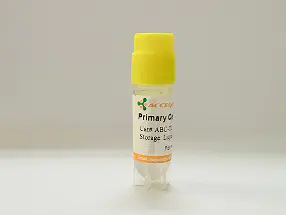
For research use only
| Cat No. | ABC-TC4177 |
| Product Type | Rat Primary Cells |
| Cell Type | Neuron |
| Species | Rat |
| Growth Conditions | 37 ℃, 5% CO2 |
| Source Organ | Brain |
| Disease | Normal |
| Storage | Liquid Nitrogen |
The tissue of the central nervous system is made up of two classes of cells that may be broadly categorized as neurons and glia.
Rat Neurons-Dorsal Spinal Cord are primarily derived from the spinal cord and are predominantly sensory relay neurons and interneurons located in the dorsal horn. Rat Neurons-Dorsal Spinal Cord exhibit a highly arborized neurite network when cultured, forming complex synaptic connections critical for sensory signal integration. They modulate central sensory pathways through glutamatergic and peptidergic neurotransmission, and process nociceptive, proprioceptive, and mechanosensory inputs from peripheral dorsal root ganglia . These cells are terminally differentiated and non-proliferative in vitro. They express neuronal markers such as β-tubulin III and MAP2. To ensure the quality of these primary cells, repeated freeze-thaw cycles are not recommended due to the fragile nature of these cells. Each lot undergoes rigorous screening and isolation procedures, and is rigorously tested to ensure it is free of contamination from Mycoplasma, Fungi, Yeast, and Bacteria.
| Product Code | Rat Neurons-Dorsal Spinal Cord, Rat Dorsal Spinal Neurons, Dorsal Spinal Neurons |
| Species | Rat |
| Cat.No | ABC-TC4177 |
| Product Category | Primary Cells |
| Size/Quantity | 1 vial |
| Cell Type | Neuron |
| Growth Mode | Adherent |
| Shipping Info | Dry Ice |
| Growth Conditions | 37 ℃, 5% CO2 |
| Source Organ | Brain |
| Disease | Normal |
| Biosafety Level | 1 |
| Storage | Liquid Nitrogen |
| Product Type | Rat Primary Cells |
| Quality Control | All cells test negative for mycoplasma, bacteria, yeast, and fungi. |
Rat dorsal spinal cord neurons are widely utilized in vitro models to study sensory processing, neuropathic pain mechanisms, and spinal circuit plasticity. Their ability to form functional synapses with dorsal root ganglion (DRG) neurons makes them valuable for co-culture systems investigating nociceptive signaling, particularly in response to inflammatory mediators or pH shifts.
When you publish your research, please cite our product as “AcceGen Biotech Cat.# XXX-0000”. In return, we’ll give you a $200 coupon. Simply click here and submit your paper’s PubMed ID (PMID).