



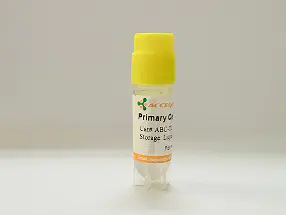
For research use only
| Cat No. | ABC-TC4180 |
| Product Type | Rat Primary Cells |
| Cell Type | Neuron |
| Species | Rat |
| Growth Conditions | 37 ℃, 5% CO2 |
| Source Organ | Brain |
| Disease | Normal |
| Storage | Liquid Nitrogen |
The tissue of the central nervous system is made up of two classes of cells that may be broadly categorized as neurons and glia.
Rat Neurons-Striatal are primarily derived from the striatum, a critical region of the basal ganglia involved in motor control and neural signal integration. These neurons exhibit characteristic neuronal morphology, including small soma and highly branched dendrites with dendritic spines, facilitating extensive synaptic connections. Functionally, these neurons integrate cortical, thalamic, and dopaminergic inputs. These cells are terminally differentiated and non-proliferative in vitro, and are not recommended for expansion or long-term culture. Rat Neurons-Striatal express neuronal marker β-tubulin III. To ensure the quality of these primary cells, repeated freeze-thaw cycles are not recommended due to the fragile nature of these cells. Each lot undergoes rigorous screening and isolation procedures, and is rigorously tested to ensure it is free of contamination from Mycoplasma, Fungi, Yeast, and Bacteria.
| Product Code | Rat Neurons-Striatal, Rat Striatal Neurons, Striatum Neurons |
| Species | Rat |
| Cat.No | ABC-TC4180 |
| Product Category | Primary Cells |
| Size/Quantity | 1 vial |
| Cell Type | Neuron |
| Growth Mode | Adherent |
| Shipping Info | Dry Ice |
| Growth Conditions | 37 ℃, 5% CO2 |
| Source Organ | Brain |
| Disease | Normal |
| Biosafety Level | 1 |
| Storage | Liquid Nitrogen |
| Product Type | Rat Primary Cells |
| Quality Control | All cells test negative for mycoplasma, bacteria, yeast, and fungi. |
Rat striatal neurons are widely used in neuroscience research to study motor control, reward processing, and neurodegenerative diseases. Due to their central role in basal ganglia circuitry, these cells are essential for modeling Parkinson’s disease (loss of dopaminergic input) and Huntington’s disease (selective MSN degeneration).
When you publish your research, please cite our product as “AcceGen Biotech Cat.# XXX-0000”. In return, we’ll give you a $200 coupon. Simply click here and submit your paper’s PubMed ID (PMID).