



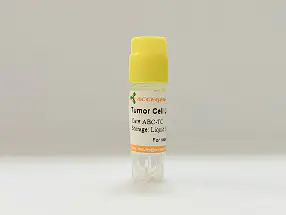
For research use only
| Cat No. | ABC-TC0030 |
| Product Type | Human Skin Cancer Cell Lines |
| Cell Type | Epithelial |
| Species | Human |
| Growth Conditions | 37 ℃, 5% CO2 |
| Source Organ | Skin |
| Disease | Epidermoid Cancer |
| Product Code | A431; A431/P |
A-431 cell line, a human epidermoid carcinoma model, widely used in EGFR signaling research, oncology drug screening, and tumorigenesis studies.
A‑431 cell line is a human epidermoid carcinoma cell line established from a vulvar lesion of an 85‑year‑old female patient. The cells exhibit cobblestone epithelial morphology, grow rapidly as adherent monolayers, and possess a hyperdiploid karyotype with structural abnormalities. A‑431 is known for its high EGFR expression, making it a powerful model for studying EGFR-related signaling. It is tumorigenic in xenograft models and serves as a platform for therapeutic response studies Additionally, metabolic interference using propranolol and 2-deoxy-D-glucose significantly reduces A‑431 viability by targeting β-adrenergic and glycolytic pathways. The cells undergo rigorous screening and isolation procedures, and are rigorously tested to ensure they are free of contamination from HIV-1, HBV, HCV, Syphilis, Mycoplasma, Fungi, Yeast, and Bacteria.
| Product Code | A431; A431/P |
| Species | Human |
| Cat.No | ABC-TC0030 |
| Product Category | Tumor Cell Lines |
| Size/Quantity | 1 vial |
| Cell Type | Epithelial |
| Growth Mode | Adherent |
| Shipping Info | Dry Ice |
| Growth Conditions | 37 ℃, 5% CO2 |
| Source Organ | Skin |
| Disease | Epidermoid Cancer |
| Biosafety Level | 1 |
| Storage | Liquid Nitrogen |
| Product Type | Human Skin Cancer Cell Lines |
A-431 cells are a benchmark model for EGFR-targeted therapy research and skin cancer biology. They are commonly used to evaluate EGFR inhibitors, with recent work demonstrating human serum interference in drug response. They also serve in cytotoxicity assays with herbal peptides (e.g. ΔM4) inducing moderate apoptosis via ROS signaling. Additionally, A-431 has been applied in metabolic stress studies involving β-blockers and glucose analogues, as well as low-frequency vibration therapy, making them a versatile tool for combined biomechanical and pharmacological cancer research.
When you publish your research, please cite our product as “AcceGen Biotech Cat.# XXX-0000”. In return, we’ll give you a $200 coupon. Simply click here and submit your paper’s PubMed ID (PMID).