



For research use only
| Cat No. | ABC-TC0087 |
| Product Type | Human Breast Cancer Cell Lines |
| Cell Type | Epithelial |
| Species | Human |
| Growth Conditions | 37 ℃, 5% CO2 |
| Source Organ | Breast |
| Disease | Ductal Cancer |
| Product Code | BT 549; BT.549; BT549 |
BT-549 breast cancer cells enable triple-negative breast cancer research, drug screening, and signaling pathway analysis in metastatic disease models.
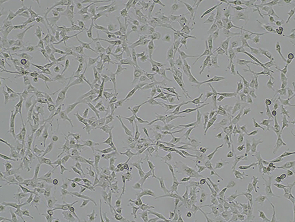
BT-549 is a human breast adenocarcinoma cell line originally isolated from the breast tissue of a 72-year-old Caucasian female patient with invasive ductal carcinoma accompanied by lymph node metastasis in 1978. These adherent cells exhibit epithelial-like morphology and consist of polymorphic populations including multinucleated giant cells. BT‑549 is triple‑negative (ER⁻, PR⁻, HER2⁻) and harbors mutant TP53. Stemline karyotype analysis reveals that BT-549 cells are Hypotriploid (modal chromosome number: 78, range: 73–80) with aneuploidy and complex structural aberrations, including loss of one X chromosome and other recurrent structural variants. It contains cytoplasmic lipid droplets and show high expression of mucin-1 and CD44. As a highly invasive model, BT‑549 displays robust migration, invasion, and metastatic potential in vivo. These features make it a representative basal‑like/claudin‑low TNBC model for studying aggressive breast cancer biology.
| Product Code | BT 549; BT.549; BT549 |
| Species | Human |
| Cat.No | ABC-TC0087 |
| Product Category | Tumor Cell Lines |
| Size/Quantity | 1 vial |
| Cell Type | Epithelial |
| Growth Mode | Adherent |
| Shipping Info | Dry Ice |
| Growth Conditions | 37 ℃, 5% CO2 |
| Source Organ | Breast |
| Disease | Ductal Cancer |
| Biosafety Level | 1 |
| Storage | Liquid Nitrogen |
| Product Type | Human Breast Cancer Cell Lines |
The BT-549 cell line has become a valuable asset in biological science, particularly in cancer research and 3D cell culture applications. Its significance lies in its relevance to ductal carcinoma, providiing insights into disease mechanisms and potential therapeutic targets. As a pivotal model in cancer research, BT-549 cells facilitate a deeper understanding of carcinoma development and the exploration of innovative treatment strategies. Moreover, their suitability for 3D cell culture makes them an ideal tool for mimicking the complex tumor microenvironment, enabling more physiologically relevant studies of drug responses and tumore progression.
When you publish your research, please cite our product as “AcceGen Biotech Cat.# XXX-0000”. In return, we’ll give you a $100 coupon. Simply click here and submit your paper’s PubMed ID (PMID).