



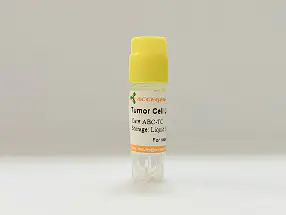
For research use only
| Cat No. | ABC-TC0116 |
| Product Type | Human Pancreas Cancer Cell Lines |
| Cell Type | Epithelial |
| Species | Human |
| Growth Conditions | 37 ℃, 5% CO2 |
| Source Organ | Pancreas |
| Disease | Pancreatic Adenocarinoma |
| Product Code | CaPan-1; CAPAN-1; Capan 1; CAPAN 1; Capan1; CAPAN1 |
Capan-1 ,Capan-1 pancreatic cells expressing CFTR and gastric mucins, used for cystic fibrosis, pancreatic cancer, and gastrointestinal research.
Capan-1 is a human pancreatic ductal adenocarcinoma cell line established from a liver metastasis of a 40-year-old Caucasian male diagnosed with pancreatic adenocarcinoma. These epithelial-like cells grow in adherent monolayer culture, produce mucin, and exhibit invasive growth through extracellular matrices. Cytogenetic analysis reveals an aneuploid human karyotype with chromosome counts ranging from 51 to 61. Molecular profiling has identified key oncogenic alterations, including a BRCA2 frameshift mutation leading to a truncated protein, KRAS^G12V activation, TP53 inactivation, EGFR overexpression, and SMAD4 loss. These cells retain epithelial ductal characteristics and chloride channel functions, making them valuable for mechanistic studies. The cell line is tumorigenic in immunocompromised mice. The cells undergo rigorous screening and isolation procedures, and are rigorously tested to ensure they are free of contamination from HIV-1, HBV, HCV, Syphilis, Mycoplasma, Fungi, Yeast, and Bacteria.
| Product Code | CaPan-1; CAPAN-1; Capan 1; CAPAN 1; Capan1; CAPAN1 |
| Species | Human |
| Cat.No | ABC-TC0116 |
| Product Category | Tumor Cell Lines |
| Size/Quantity | 1 vial |
| Cell Type | Epithelial |
| Growth Mode | Adherent |
| Shipping Info | Dry Ice |
| Growth Conditions | 37 ℃, 5% CO2 |
| Source Organ | Pancreas |
| Disease | Pancreatic Adenocarinoma |
| Biosafety Level | 1 |
| Storage | Liquid Nitrogen |
| Product Type | Human Pancreas Cancer Cell Lines |
Capan-1 cells are widely utilized in pancreatic cancer research, particularly for modeling ductal adenocarcinoma progression, metastasis, and drug resistance. They serve as a versatile platform in various research studies, including invasion assays, 3D spheroid cultures, and investigations into DNA repair mechanisms due to BRCA2 deficiency. Studies involving chemotherapeutics such as 5-fluorouracil and paclitaxel, utilize Capan-1 to explore resistance mechanisms and to evaluate apoptosis induced by agents like bafilomycin A1.
When you publish your research, please cite our product as “AcceGen Biotech Cat.# XXX-0000”. In return, we’ll give you a $200 coupon. Simply click here and submit your paper’s PubMed ID (PMID).