



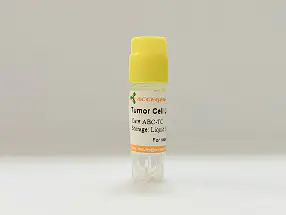
For research use only
| Cat No. | ABC-TC0126 |
| Product Type | Human Leukemia Cell Lines |
| Cell Type | T Cell |
| Species | Human |
| Growth Conditions | 37 ℃, 5% CO2 |
| Source Organ | Peripheral Blood |
| Disease | Acute Lymphoblastic Leukemia |
| Product Code | CCRF HSB-2; CCRF-HSB2; HSB-2; HSB.2; HSB2; H-SB2; SB-2; HSB; H.S.B. |
CCRF-HSB-2. Human Caucasian acute lymphoblastic leukemia T lymphoblastoid cell line from the peripheral blood of an 11-year-old male patient.
CCRF‑HSB‑2 is a human T‑lymphoblastoid cell line established from the peripheral blood of an 11-year-old male patient with acute lymphoblastic leukemia (ALL). The cells were initially propagated in newborn hamsters before being adapted to in vitro culture. They grow in suspension as lymphoblasts and display a round to polygonal morphology. Cytogenetic analysis reveals a pseudodiploid karyotype (2n = 46,XY) with translocations such as t(1;7)(p34;q34), resulting in LCK–TCRB fusion and STIL–TAL1 rearrangement. The cells express CD5, CD6, CD7, CD8, and cytoplasmic CD3, consistent with T-cell lineage, while lacking CD4. CCRF‑HSB‑2 cells are TAL1-positive, wild-type for NOTCH1, and harbor mutations in CDKN2A and FBXW7. CCRF‑HSB‑2 is tumorigenic in immunodeficient rodent hosts. The cells undergo rigorous screening and isolation procedures, and are rigorously tested to ensure they are free of contamination from HIV-1, HBV, HCV, Syphilis, mycoplasma, fungi, yeast, and bacteria.
| Product Code | CCRF HSB-2; CCRF-HSB2; HSB-2; HSB.2; HSB2; H-SB2; SB-2; HSB; H.S.B. |
| Species | Human |
| Cat.No | ABC-TC0126 |
| Product Category | Tumor Cell Lines |
| Size/Quantity | 1 vial |
| Cell Type | T Cell |
| Growth Mode | Suspension |
| Shipping Info | Dry Ice |
| Growth Conditions | 37 ℃, 5% CO2 |
| Source Organ | Peripheral Blood |
| Disease | Acute Lymphoblastic Leukemia |
| Biosafety Level | 1 |
| Storage | Liquid Nitrogen |
| Product Type | Human Leukemia Cell Lines |
CCRF‑HSB‑2 is a widely used in vitro model for studying T‑cell acute lymphoblastic leukemia (T‑ALL), particularly to explore molecular drivers like TAL1, TCR signaling fusions, and NOTCH1 modulation. Its sensitivity to DNA-damaging agents makes it suitable for research on radiation response, apoptotic pathways, and DNA repair mechanisms. The cell line’s stable expression of CD7 and cyCD3 supports development of immunotherapeutic approaches, including bispecific antibodies and CAR‑T assays. Additionally, CCRF‑HSB‑2 serves in drug screening, biomarker discovery, and functional genomics to identify novel therapeutic strategies in T‑ALL models.
When you publish your research, please cite our product as “AcceGen Biotech Cat.# XXX-0000”. In return, we’ll give you a $200 coupon. Simply click here and submit your paper’s PubMed ID (PMID).