



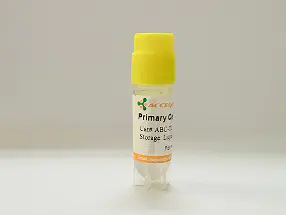
For research use only
| Cat No. | ABC-TC3297 |
| Product Type | Mouse Primary Cells |
| Cell Type | Meningeal Cell |
| Species | CD-1 Mouse |
| Growth Conditions | 37 ℃, 5% CO2 |
| Source Organ | Brain |
| Disease | Normal |
| Storage | Liquid Nitrogen |
Meningeal cells surrounding the brain participate actively in the normal development of the central nervous system.
CD-1 Mouse Meningeal Cells are primary cells isolated from the meninges of neonatal CD-1 mice with no neurological disease. These adherent cells exhibit fibroblast-like morphology, strong adherence, and maintain intrinsic meningeal functions essential for meningeal tissue homeostasis and CNS development in CD-1 mice. They provide a physiologically relevant and consistent model for studies of central nervous system biology, including CNS co-culture systems, 3D neural scaffold development, and investigation into the structure of the meningeal layers in CD-1 mice during neurodevelopment and neuroinflammation. To ensure the quality of these primary cells, repeated freeze-thawcycles are not recommended due to the fragile nature of these cells. Each lot undergoes rigorous screening and isolation procedures, and is rigorously tested to ensure it is free of contamination from Mycoplasma, Fungi, Yeast, and Bacteria.
| Product Code | CD-1 Mouse Meningeal Cells, Mouse Meningeal Cells, Meningeal Cells, Meningeal Cells, MCs, CD-1 MCs |
| Species | CD-1 Mouse |
| Cat.No | ABC-TC3297 |
| Product Category | Primary Cells |
| Size/Quantity | 1 vial |
| Cell Type | Meningeal Cell |
| Growth Mode | Adherent |
| Shipping Info | Dry Ice |
| Growth Conditions | 37 ℃, 5% CO2 |
| Source Organ | Brain |
| Disease | Normal |
| Biosafety Level | 1 |
| Storage | Liquid Nitrogen |
| Product Type | Mouse Primary Cells |
| Quality Control | All cells test negative for mycoplasma, bacteria, yeast, and fungi. |
CD-1 Mouse Meningeal Cells are a valuable tool for exploring central nervous system (CNS) development, particularly in studies focused on neurogenesis, gliogenesis, and the formation of the blood-brain barrier. These cells are widely used to model neuroinflammatory processes, cytokine-mediated signaling, and to investigate cellular interactions between meningeal fibroblasts and neurons or glial cells. Researchers also use them in 3D culture systems and brain-on-chip models to simulate physiological environments for high-fidelity screening and functional assays.
When you publish your research, please cite our product as “AcceGen Biotech Cat.# XXX-0000”. In return, we’ll give you a $200 coupon. Simply click here and submit your paper’s PubMed ID (PMID).