



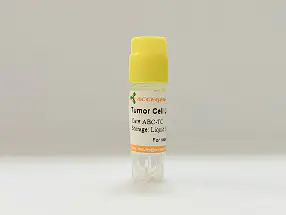
For research use only
| Cat No. | ABC-TC0151 |
| Product Type | Human Colon Cancer Cell Lines |
| Cell Type | Fibroblast-like |
| Species | Human |
| Growth Conditions | 37 ℃, 5% CO2 |
| Source Organ | Colon |
| Disease | Colon Adenocarinoma |
| Product Code | Colo 201; Colo-201; COLO 201; COLO201; Colo201; Colorado 201 |
COLO-201 Cell Line is essential for colorectal cancer research, studying tumor progression, drug resistance, and molecular signaling in cancer cells.
COLO‑201 cell line is a human colon adenocarcinoma line derived from ascitic fluid of a 70-year-old Caucasian male with advanced colorectal carcinoma (Dukes’ type D). These cells are fibroblast-like, bipolar, slightly refractile, and grow in a loosely adherent monolayer with floating aggregates. COLO‑201 has low levels of carcinoembryonic antigen (CEA) secretion. The cell line is tumorigenic in nude mice, forming glandular structures similar to human adenocarcinoma. COLO‑201 is known for its microsatellite stability (MSS) and wild-type p53 status, offering a stable platform for colorectal cancer studies. This line is widely used in colorectal cancer research, particularly for toxicology and 3D culture applications. The cells undergo rigorous screening and isolation procedures, and are rigorously tested to ensure they are free of contamination from HIV-1, HBV, HCV, syphilis, mycoplasma, fungi, yeast, and bacteria.
| Product Code | Colo 201; Colo-201; COLO 201; COLO201; Colo201; Colorado 201 |
| Species | Human |
| Cat.No | ABC-TC0151 |
| Product Category | Tumor Cell Lines |
| Size/Quantity | 1 vial |
| Cell Type | Fibroblast-like |
| Growth Mode | Adherent and Suspension |
| Shipping Info | Dry Ice |
| Growth Conditions | 37 ℃, 5% CO2 |
| Source Organ | Colon |
| Disease | Colon Adenocarinoma |
| Biosafety Level | 1 |
| Storage | Liquid Nitrogen |
| Product Type | Human Colon Cancer Cell Lines |
COLO‑201 is extensively used in colorectal cancer research, including 3D spheroid models, toxicology screening, and chemotherapeutic evaluation. Its CD44-positive subpopulation demonstrates classical cancer stem cell behavior—enhanced tumorigenesis in immunodeficient mice and increased resistance to agents like 5‑FU—making it ideal for cancer stem cell studies. The line’s triploid genomes and MSS status support genomic stability analyses and drug-resistance investigations. Additionally, COLO‑201 is suited for toxicological assessment, owing to its ability to respond to cytotoxic stimuli in a reliable manner. Overall, it provides a valuable platform for drug development, mechanistic studies, and preclinical screening in gastrointestinal oncology.
When you publish your research, please cite our product as “AcceGen Biotech Cat.# XXX-0000”. In return, we’ll give you a $200 coupon. Simply click here and submit your paper’s PubMed ID (PMID).