



For research use only
| Cat No. | ABC-TC0181 |
| Product Type | Human Lung Cancer Cell Lines |
| Cell Type | Epithelial |
| Species | Human |
| Growth Conditions | 37 ℃, 5% CO2 |
| Source Organ | Lung |
| Disease | Lung Small Cell Cancer |
| Product Code | COR L279; CORL279; LuCL4 |
COR-L279, an SCLC cell line with epithelial morphology and TP53 deletion, isolated from a 63-year-old male, ideal for cancer research.
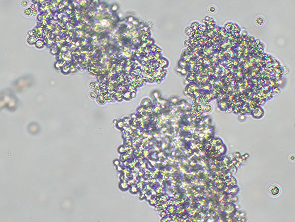
COR-L279 is a human small cell lung cancer (SCLC) cell line derived from a metastatic lymph node of a 63-year-old untreated male patient. The cells exhibit epithelial-like morphology with features of degeneration and necrosis typical of aggressive SCLC. They grow adherently in culture and can be passaged for experimental use. COR-L279 retains key tumorigenic properties including rapid proliferation and metastatic potential. Genomically, the cell line is microsatellite stable and harbors a homozygous deletion of TP53 and a truncating mutation in EP300, among other alterations. These genetic changes contribute to its aggressive phenotype and make it a relevant model for investigating mechanisms of drug resistance, metastasis, and therapeutic response in high-mortality SCLC. COR-L279 serves as a valuable tool in preclinical research aimed at developing novel treatments for SCLC.
| Product Code | COR L279; CORL279; LuCL4 |
| Species | Human |
| Cat.No | ABC-TC0181 |
| Product Category | Tumor Cell Lines |
| Size/Quantity | 1 vial |
| Cell Type | Epithelial |
| Growth Mode | Suspension |
| Shipping Info | Dry Ice |
| Growth Conditions | 37 ℃, 5% CO2 |
| Source Organ | Lung |
| Disease | Lung Small Cell Cancer |
| Biosafety Level | 1 |
| Storage | Liquid Nitrogen |
| Product Type | Human Lung Cancer Cell Lines |
The COR-L279 human lung small cell carcinoma (SCLC) cell line advances cancer biology through tumor microenvironment investigations and therapeutic target identification. It facilitates drug development by studying chemotherapy efficacy, drug resistance mechanisms, and novel drug discovery while supporting molecular research via genomic profiling for genetic alterations and biomarker discovery for early detection and prognosis. These cells further enable immunotherapy investigations of immune responses and checkpoint inhibitor roles, cell biology studies on cell cycle dysregulation and signaling pathways, and metastasis research examining metastatic cascades and cellular invasion/migration behavior.
When you publish your research, please cite our product as “AcceGen Biotech Cat.# XXX-0000”. In return, we’ll give you a $200 coupon. Simply click here and submit your paper’s PubMed ID (PMID).