



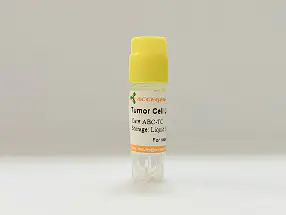
For research use only
| Cat No. | ABC-TC0205 |
| Product Type | Cricetulus Griseus Lung Cell Lines |
| Cell Type | Fibroblast |
| Species | Cricetulus Griseus |
| Growth Conditions | 37 ℃, 5% CO2 |
| Source Organ | Lung |
| Product Code | Dede |
Hamster Chinese lung female. Derived from the lung of an adult female Chinese hamster. Spindle shaped fibroblasts.
The DEDE cell line is derived from the lung tissue of an adult female Chinese hamster. As a spontaneously immortalized fibroblast-like cell line, it exhibits an adherent growth pattern with a spindle-shaped morphology under light microscopy, characterized by elongated cell bodies and centrally located nuclei. The karyotype of this cell line is diploid with a chromosome number of 2n = 22. The DEDE cell line is associated with the expression of proteins such as DEDD, ADNP2, CPNE1, and RNASEH2A. Each lot undergoes rigorous screening and isolation procedures, and is rigorously tested to ensure it is free of contamination from Mycoplasma, Fungi, Yeast, and Bacteria.
| Product Code | Dede |
| Species | Cricetulus Griseus |
| Cat.No | ABC-TC0205 |
| Product Category | Tumor Cell Lines |
| Size/Quantity | 1 vial |
| Cell Type | Fibroblast |
| Growth Mode | Adherent |
| Shipping Info | Dry Ice |
| Growth Conditions | 37 ℃, 5% CO2 |
| Source Organ | Lung |
| Biosafety Level | 1 |
| Storage | Liquid Nitrogen |
| Product Type | Cricetulus Griseus Lung Cell Lines |
DEDE is widely applied in biomedical research due to its robust growth and genetic stability. It serves as a key model for recombinant protein production, particularly in biopharmaceutical manufacturing, owing to its high transfection efficiency and capacity to secrete functional proteins like antibodies or enzymes. This cell line is widely used in genetic engineering studies, enabling gene editing via CRISPR/Cas9 to investigate gene function or develop disease models.
When you publish your research, please cite our product as “AcceGen Biotech Cat.# XXX-0000”. In return, we’ll give you a $200 coupon. Simply click here and submit your paper’s PubMed ID (PMID).