



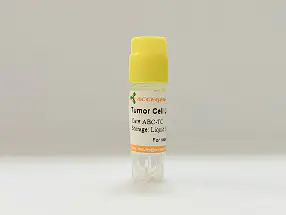
For research use only
| Cat No. | ABC-TC0216 |
| Product Type | Human Lung Cancer Cell Lines |
| Cell Type | Epithelial |
| Species | Human |
| Growth Conditions | 37 ℃, 5% CO2 |
| Source Organ | Lung |
| Disease | Lung Small Cell Cancer |
| Product Code | DMS-53; DMS53 |
Scrutinize DMS 53,Human lung small cell carcinoma (SCLC) isolated in 1974 from mediastinal biopsy of a 54-year-old male patient before treatment.
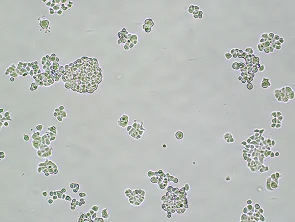
DMS 53 is a small cell carcinoma of the lung (SCLC) isolated in 1974 from a mediastinal biopsy at the time of diagnosis from a 54-year-old male patient prior to treatment. It exhibits an epithelial-like morphology and adherent growth characteristics. The DMS 53 cell line expresses a diverse array of peptide and protein hormones, including adrenocorticotropin (ACTH), bombesin (BN), calcitonin, human chorionic gonadotropin (hCG), glucagon, growth hormone, 17β-estradiol, thyroid-releasing hormone, oxytocin-neurophysin (OT-NP), parathormone, and somatostatin-like immunoreactivity (SRIF), reflecting a broad neuroendocrine secretory profile. This cell line exhibits high tumorigenicity. Each lot undergoes rigorous screening and isolation procedures, and is rigorously tested to ensure it is free of contamination from HIV-1, HBV, HCV, Syphilis, Mycoplasma, Fungi, Yeast, and Bacteria.
| Product Code | DMS-53; DMS53 |
| Species | Human |
| Cat.No | ABC-TC0216 |
| Product Category | Tumor Cell Lines |
| Size/Quantity | 1 vial |
| Cell Type | Epithelial |
| Growth Mode | Adherent |
| Shipping Info | Dry Ice |
| Growth Conditions | 37 ℃, 5% CO2 |
| Source Organ | Lung |
| Disease | Lung Small Cell Cancer |
| Biosafety Level | 1 |
| Storage | Liquid Nitrogen |
| Product Type | Human Lung Cancer Cell Lines |
DMS 53 is widely used in cancer biology and drug discovery research due to its neuroendocrine features, hormone secretion, and high tumorigenicity. As a representative SCLC model, it is employed to study cellular proliferation, invasion, and chemoresistance mechanisms in vitro. The cell line’s secretion of ACTH, calcitonin, and hCG makes it valuable for in vitro studies of neuroendocrine features associated with SCLC.
When you publish your research, please cite our product as “AcceGen Biotech Cat.# XXX-0000”. In return, we’ll give you a $200 coupon. Simply click here and submit your paper’s PubMed ID (PMID).