



For research use only
| Cat No. | ABC-TC440S |
| Product Type | Human Leukemia Cell Lines |
| Cell Type | Lymphoblast |
| Species | Human |
| Growth Conditions | 37 ℃, 5% CO2 |
| Source Organ | Blood |
| Product Code | EOL-1; EOL1; EoL-1-cell; EoL-1 cell; AML-EOL-1 |
EoL-1 cells respond to IL-5, model eosinophil differentiation, and allow HIV-1 infection studies, valuable for leukemia and immunology research.
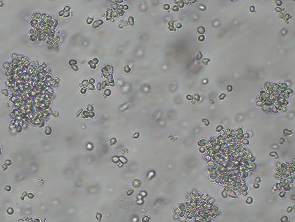
EoL-1 is a human acute myeloid leukemia (AML) cell line derived from the peripheral blood of a 33-year-old male patient diagnosed with AML with eosinophilic differentiation. This cell line exhibits suspension adherence pattern under standard conditions. Karyotypic analysis reveals a characteristic t(5;12)(q31;p13) translocation generating ETV6-ACSL6 fusion, a hallmark genetic alteration in specific AML subtypes. EoL-1 cells express eosinophilic lineage surface markers, including CD11b, CD13, CD125 (IL-5Rα) , and CD33, and exhibit interleukin-5 (IL-5) sensitivity, which induces eosinophilic maturation, enabling their utility in studying eosinophil differentiation pathways . This cell line shows susceptibility to HIV-1 infection, further broadening their utility in modeling host-pathogen interactions. EoL-1 is tumorigenic and serves as a critical model for investigating AML pathophysiology, hematopoietic development, and drug screening.
| Product Code | EOL-1; EOL1; EoL-1-cell; EoL-1 cell; AML-EOL-1 |
| Species | Human |
| Cat.No | ABC-TC440S |
| Product Category | Tumor Cell Lines |
| Size/Quantity | 1 vial |
| Cell Type | Lymphoblast |
| Growth Mode | Suspension |
| Shipping Info | Dry Ice |
| Growth Conditions | 37 ℃, 5% CO2 |
| Source Organ | Blood |
| Biosafety Level | 2 |
| Storage | Liquid Nitrogen |
| Product Type | Human Leukemia Cell Lines |
EoL-1 serves as a valuable model in hematological malignancy research, especially in studies focusing on eosinophilic acute myeloid leukemia (AML). Its IL-5 responsiveness and eosinophilic marker expression allow for in-depth analysis of eosinophil lineage commitment and differentiation mechanisms. This cell line is also instrumental in evaluating chemotherapeutic agents targeting leukemic blasts or eosinophil differentiation pathways, enabling high-throughput drug efficacy and cytotoxicity screening. Additionally, EoL-1 provides a robust in vitro for exploring virus-host interactions, offering insights into the interplay between hematopoietic malignancies and viral pathogenesis.
When you publish your research, please cite our product as “AcceGen Biotech Cat.# XXX-0000”. In return, we’ll give you a $200 coupon. Simply click here and submit your paper’s PubMed ID (PMID).