



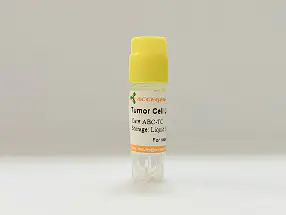
For research use only
| Cat No. | ABC-TC0390 |
| Product Type | Human Leukemia Cell Lines |
| Cell Type | Lymphocyte-like |
| Species | Human |
| Growth Conditions | 37 ℃, 5% CO2 |
| Source Organ | Peripheral Blood |
| Disease | Acute Myeloid Leukemia |
| Product Code | HL-60/S |
Acute promyelotic leukemia. Premyeloblastic cell line differentiated to neutrophils or macropahges by tumor promoters, vitamne D3 or cytekines.
HL-60(S) is a human promyelocytic leukemia cell line originally established from the peripheral blood of a 36-year-old Caucasian female with acute promyelocytic leukemia (APL). It exhibits a round to oval morphology and grows in suspension without the need for attachment. The cells are non-adherent and maintain high proliferative capacity under standard culture conditions. HL-60(S) shows diploid to near-diploid karyotype, with a modal chromosome number around 46, often exhibiting structural abnormalities involving chromosomes 5, 8, and 16. The line is widely recognized for its ability to differentiate into granulocytes or monocytes upon treatment with agents such as DMSO, ATRA, or PMA, making it a valuable model for hematopoietic differentiation studies. Although HL-60(S) is not spontaneously tumorigenic in immunodeficient mice, it can be induced to form tumors under specific experimental conditions. The cells undergo rigorous screening and isolation procedures, and are rigorously tested to ensure they are free of contamination from HIV-1, HBV, HCV, Syphilis, Mycoplasma, Fungi, Yeast, and Bacteria.
| Product Code | HL-60/S |
| Species | Human |
| Cat.No | ABC-TC0390 |
| Product Category | Tumor Cell Lines |
| Size/Quantity | 1 vial |
| Cell Type | Lymphocyte-like |
| Shipping Info | Dry Ice |
| Growth Conditions | 37 ℃, 5% CO2 |
| Source Organ | Peripheral Blood |
| Disease | Acute Myeloid Leukemia |
| Biosafety Level | 1 |
| Storage | Liquid Nitrogen |
| Product Type | Human Leukemia Cell Lines |
HL-60(S) is extensively used in leukemia research, particularly in exploring the molecular pathways of myeloid differentiation and apoptosis. It serves as a robust model for evaluating anti-leukemic compounds, epigenetic regulators, and chemotherapeutic agents. Its capacity for inducible differentiation into neutrophil- or macrophage-like cells makes it a critical tool for studying hematopoietic maturation, signal transduction, and inflammatory responses. HL-60(S) also supports research into oxidative stress, DNA damage response, and oncogene/tumor suppressor regulation.
When you publish your research, please cite our product as “AcceGen Biotech Cat.# XXX-0000”. In return, we’ll give you a $200 coupon. Simply click here and submit your paper’s PubMed ID (PMID).