



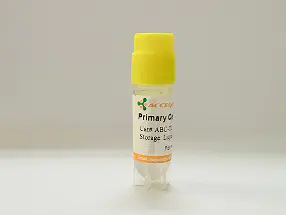
For research use only
| Cat No. | ABC-TC4601 |
| Product Type | Female Reproductive Cells |
| Cell Type | Epithelial |
| Species | Human |
| Growth Conditions | 37 ℃, 5% CO2 |
| Source Organ | Endometrial |
| Disease | Normal |
| Storage | Liquid Nitrogen |
Study how HEEC cells help with secretion and protection in the uterus. Perfect for research on reproductive health. Contact us for details.
Human Endometrial Epithelial Cells (HEEC) are primary cells derived from human endometrial epithelial tissue (a specialized component of the uterine epithelium) and cryopreserved post-isolation. In vitro, they display characteristic polygonal morphology and form tightly adherent monolayers, mimicking their in vivo barrier function. Positioned on the luminal surface of the endometrium, HEEC are essential for maintaining uterine homeostasis through secretion, barrier integrity, and immune modulation. These endometrial cell express epithelial markers such as cytokeratin and E-cadherin. HEEC are widely utilized in studies of menstrual cycle dynamics, embryo implantation, and inflammatory signaling, as well as in models of endometriosis and infertility. Their culture provides a physiologically relevant platform for reproductive biology and gynecological disease research. To maintain optimal function and viability, repeated freeze-thaw cycles should be avoided.
| Product Code | Human Endometrial Epithelial Cells, Human Endometrium EC, hEEC, Endometrial Epithelial Cells |
| Species | Human |
| Cat.No | ABC-TC4601 |
| Product Category | Primary Cells |
| Size/Quantity | 1 vial |
| Cell Type | Epithelial |
| Growth Mode | Adherent |
| Shipping Info | Dry Ice |
| Growth Conditions | 37 ℃, 5% CO2 |
| Source Organ | Endometrial |
| Disease | Normal |
| Biosafety Level | 1 |
| Storage | Liquid Nitrogen |
| Product Type | Female Reproductive Cells |
| Quality Control | All cells test negative for mycoplasma, bacteria, yeast, and fungi. |
Human Endometrial Epithelial Cells (HEECs) play a vital role in understanding endometrial biology and female reproductive health. These hormone-responsive cells are widely used in studies of embryo implantation, menstrual regulation, and infertility. HEECs also serve as valuable models for investigating endometrial disorders, including endometriosis and endometrial cancer. Their responsiveness to estrogen and progesterone makes them ideal for drug screening and IVF-related research. Additionally, HEECs support studies of gene expression, cellular signaling, and endometrial tissue engineering. Their use enhances our understanding of endometrial function and disease mechanisms.
When you publish your research, please cite our product as “AcceGen Biotech Cat.# XXX-0000”. In return, we’ll give you a $200 coupon. Simply click here and submit your paper’s PubMed ID (PMID).
Xiang D, Zhao M, Cai X, et al. Betulinic Acid Inhibits Endometriosis Through Suppression of Estrogen Receptor β Signaling Pathway. Front Endocrinol (Lausanne). 2020;11:604648. Published 2020 Dec 10. doi:10.3389/fendo.2020.604648