



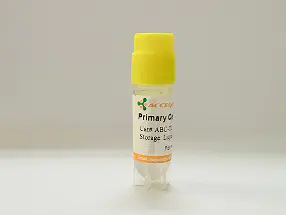
For research use only
| Cat No. | ABC-TC3031 |
| Product Type | Keratinocyte |
| Cell Type | Keratinocyte |
| Species | Human |
| Growth Conditions | 37 ℃, 5% CO2 |
| Source Organ | Skin |
| Disease | Diabetic |
| Storage | Liquid Nitrogen |
Utilize Adult Diabetic Donor Keratinocytes for investigating wound healing impairments, insulin signaling, and diabetic skin pathophysiology.
Human Keratinocytes, Adult, Diabetic Donor, are isolated from the epidermal layer of skin tissue from adult donors with confirmed type 2 diabetes mellitus (T2DM). These primary cells, cryopreserved at early passage, exhibit epithelial morphology and limited proliferative capacity in vitro. In diabetic skin, keratinocytes exhibit altered proliferation, differentiation, and impaired wound repair capacity—key features implicated in chronic wound pathology. They are characterized by decreased expression of stemness markers (e.g., K19, β1-integrin). Due to their metabolic and inflammatory alterations, they provide a valuable in vitro model for studying skin complications associated with diabetes. Each lot undergoes rigorous screening and isolation procedures, and is rigorously tested to ensure it is free of contamination from HIV-1, HBV, HCV, Syphilis, Mycoplasma, Fungi, Yeast, and Bacteria.
| Product Code | Human Keratinocytes, Adult, Diabetic Donor, Adult diabetic human keratinocytes, Human diabetic keratinocytes |
| Species | Human |
| Cat.No | ABC-TC3031 |
| Product Category | Primary Cells |
| Size/Quantity | 1 vial |
| Cell Type | Keratinocyte |
| Growth Mode | Adherent |
| Shipping Info | Dry Ice |
| Growth Conditions | 37 ℃, 5% CO2 |
| Source Organ | Skin |
| Disease | Diabetic |
| Biosafety Level | 1 |
| Storage | Liquid Nitrogen |
| Product Type | Keratinocyte |
| Quality Control | All cells test negative for mycoplasma, bacteria, yeast, and fungi. |
These diabetic keratinocytes are ideal for exploring delayed wound healing mechanisms, testing regenerative therapies, and investigating epidermal responses to hyperglycemic stress. They support studies in diabetic skin disease research, such as diabetic foot ulcers, skin barrier dysfunction, and keratinocyte-microbiome interactions. They can also be employed in transcriptomic and proteomic profiling to identify biomarkers linked to diabetic skin dysfunction.
When you publish your research, please cite our product as “AcceGen Biotech Cat.# XXX-0000”. In return, we’ll give you a $200 coupon. Simply click here and submit your paper’s PubMed ID (PMID).