



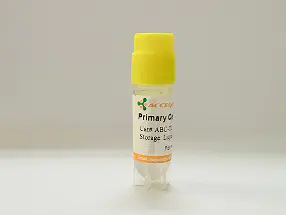
For research use only
| Cat No. | ABC-TC3998 |
| Product Type | Normal Human Peripheral Blood Mononuclear Cells |
| Cell Type | Basophil |
| Species | Human |
| Growth Conditions | 37 ℃, 5% CO2 |
| Source Organ | Peripheral Blood |
| Disease | Normal |
| Storage | Liquid Nitrogen |
Human Peripheral Blood Basophils are rare granulocytes key in allergies,producing histamine,serotonin,and heparin to regulate inflammation and coagulation.
Human Peripheral Blood Basophils are rare granulocytes (0. 5-3% of circulating leukocytes) typically isolated via immunomagnetic selection from PBMCs. As the largest granulocytes, they contain prominent basophilic granules that stain intensely with hematoxylin due to their high content of sulfated glycosaminoglycans. These granules store preformed mediators including histamine (inducing vascular permeability), heparin (anticoagulation), and chondroitin sulfates. Basophils mediate type I hypersensitivity reactions through high-affinity FcεRI receptors that bind IgE, triggering degranulation upon allergen exposure. They additionally synthesize IL-4 and IL-13, polarizing Th2 immune responses in allergic diseases (asthma, anaphylaxis, allergic rhinitis). While capable of phagocytosis, their primary role involves modulating inflammation through mediator release and interactions with mast cells and eosinophils in mucosal tissues. Recent studies also implicate basophils in IgG-mediated anaphylaxis via FcγRIIA activation and autoimmune pathogenesis.
| Product Code | Human Peripheral Blood Basophils, PB Basophils, Circulating Basophilic Granulocytes, Peripheral Basophil Cells |
| Species | Human |
| Cat.No | ABC-TC3998 |
| Product Category | Primary Cells |
| Size/Quantity | 1 vial |
| Cell Type | Basophil |
| Shipping Info | Dry Ice |
| Growth Conditions | 37 ℃, 5% CO2 |
| Source Organ | Peripheral Blood |
| Disease | Normal |
| Biosafety Level | 1 |
| Storage | Liquid Nitrogen |
| Product Type | Normal Human Peripheral Blood Mononuclear Cells |
| Quality Control | All cells test negative for mycoplasma, bacteria, yeast, and fungi. |
Human peripheral blood basophils are essential for investigating type I hypersensitivity reactions, allergic inflammation, and immune regulation, serving as key effector cells in IgE-mediated responses through histamine release, cytokine production, and surface marker expression. These cells are widely used to study allergy pathogenesis, including anaphylaxis and chronic inflammation, as well as to evaluate potential anti-allergy therapeutics such as IgE-targeting biologics. Additionally, basophils facilitate research into Th2 cell interactions and serve as a platform for biomarker discovery to improve clinical allergy diagnostics, making them invaluable for both mechanistic immunology studies and translational applications in drug development and personalized medicine.
When you publish your research, please cite our product as “AcceGen Biotech Cat.# XXX-0000”. In return, we’ll give you a $200 coupon. Simply click here and submit your paper’s PubMed ID (PMID).
Basophils are a type of white blood cell involved in immune responses, particularly allergic reactions and inflammation. They contain granules rich in histamine and other mediators that help modulate immune activity.
The purity of our basophils is >80%. These cells are not suitable for long-term culture and are typically intended for short-term experiments within 24–48 hours after thawing. A decrease in viability after overnight incubation is common and expected. We recommend using the cells promptly after recovery for optimal assay performance.