



For research use only
| Cat No. | ABC-TC0536 |
| Product Type | Human Leukemia Cell Lines |
| Species | Human |
| Growth Conditions | 37 ℃, 5% CO2 |
| Source Organ | Bone Marrow |
| Product Code | K052; K-052 |
KO52 suspension cells from male with acute leukemia express myeloid, lymphoid markers, have TP53/NRAS mutations, form tumors, model therapy resistance.
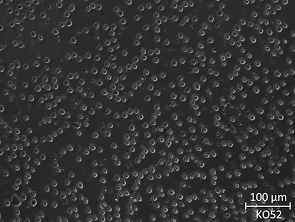
The KO52 (KO52) cell line is s a human acute myeloblastic leukemia cell line derived from the bone marrow of a 46-year-old male patient with CD7⁺ mixed-phenotype acute leukemia. The cells exhibit small, lymphocyte-like morphology and grow in suspension culture. Immunophenotyping reveals expression of both myeloid markers (CD13, CD33) and T-cell-associated antigens (CD2, CD5, CD7), along with HLA-DR. These cells harbor clinically relevant genetic alterations including a pathogenic TP53 R248W mutation (17p deletion) and NRAS G13R mutation, while lacking BCR-ABL1 and FLT3 abnormalities. KO52 demonstrates plasticity through cytokine-induced differentiation into monocytic (PMA/1, 25(OH)₂D₃) or granulocytic (G-CSF) lineages, maintained in standard culture. The line is tumorigenic when xenografted into immunodeficient mice, demonstrating robust leukemic growth. Their moderate cytarabine sensitivity and imatinib resistance make them particularly valuable for studying therapy resistance mechanisms in acute leukemia.
| Product Code | K052; K-052 |
| Species | Human |
| Cat.No | ABC-TC0536 |
| Product Category | Tumor Cell Lines |
| Size/Quantity | 1 vial |
| Shipping Info | Dry Ice |
| Growth Conditions | 37 ℃, 5% CO2 |
| Source Organ | Bone Marrow |
| Biosafety Level | 1 |
| Storage | Liquid Nitrogen |
| Product Type | Human Leukemia Cell Lines |
The KO52 cell line has significant potential in leukemia research. It is a valuable tool for studying the cellular and molecular processes of leukemogenesis and differentiation, revealing the mechanisms of disease progression. Additionally, the KO52 cell line can be instrumental in investigating the expression mechanism of the multi-drug resistance 1 (MDR1) gene. By identifying key signaling factors, it offers the possibility of identifying novel therapeutic targets for both acute and chronic myeloid leukemias. KO52 cells can also be used to test antibodies and evaluate the cytotoxic effects of chemicals, aiding the development of new leukemia therapies.
When you publish your research, please cite our product as “AcceGen Biotech Cat.# XXX-0000”. In return, we’ll give you a $200 coupon. Simply click here and submit your paper’s PubMed ID (PMID).