



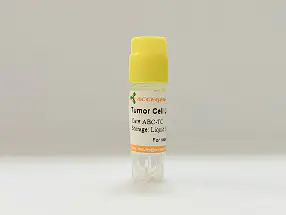
For research use only
| Cat No. | ABC-TC0551 |
| Product Type | Human Leukemia Cell Lines |
| Cell Type | Basophil |
| Species | Human |
| Growth Conditions | 37 ℃, 5% CO2 |
| Source Organ | Peripheral Blood |
| Disease | Chronic Myeloid Leukemia |
| Product Code | KU-812-F; KU-812F; KU 812F; KU812-F |
Chronic myeloid leukemia (CML). Clonal isolation of KU812
KU812F is a human chronic myelogenous leukemia (CML) cell line derived from the peripheral blood of a 38-year-old Japanese male patient in blast crisis. The cells exhibit a round to irregular morphology with non-adherent suspension growth properties and features typical of the basophilic granulocytic lineage. KU812F carries the Philadelphia chromosome [t(9;22)(q34;q11)] and expresses the BCR-ABL fusion gene, which drives constitutive tyrosine kinase activity. Cytogenetic analysis reveals a complex karyotype, including additional abnormalities associated with blast-phase progression. These cells express high levels of FcεRI (high-affinity IgE receptor) and CD123 (IL-3 receptor α), consistent with basophilic characteristics and eosinophilic-associated markers. KU812F is tumorigenic in immunodeficient mice and serves as a model of advanced-stage hematologic malignancies. The cells undergo rigorous screening and isolation procedures, and are rigorously tested to ensure they are free of contamination from HIV-1, HBV, HCV, Syphilis, Mycoplasma, Fungi, Yeast, and Bacteria.
| Product Code | KU-812-F; KU-812F; KU 812F; KU812-F |
| Species | Human |
| Cat.No | ABC-TC0551 |
| Product Category | Tumor Cell Lines |
| Size/Quantity | 1 vial |
| Cell Type | Basophil |
| Growth Mode | Suspension |
| Shipping Info | Dry Ice |
| Growth Conditions | 37 ℃, 5% CO2 |
| Source Organ | Peripheral Blood |
| Disease | Chronic Myeloid Leukemia |
| Biosafety Level | 1 |
| Storage | Liquid Nitrogen |
| Product Type | Human Leukemia Cell Lines |
KU812F cells are widely used in leukemia research to study chronic myeloid leukemia (CML) pathogenesis, KU812F cell signaling, and mechanisms of blast crisis transformation. They serve as a platform for evaluating tyrosine kinase inhibitors (e.g., imatinib, dasatinib), exploring cytokine-mediated differentiation, and modeling allergic inflammation via FcεRI-dependent basophil activation. Additionally, they provide a translational model to investigate therapeutic resistance and test novel CML treatment strategies under advanced or refractory phases of CML.
When you publish your research, please cite our product as “AcceGen Biotech Cat.# XXX-0000”. In return, we’ll give you a $200 coupon. Simply click here and submit your paper’s PubMed ID (PMID).