



For research use only
| Cat No. | ABC-TC0553 |
| Product Type | Human Leukemia Cell Lines |
| Cell Type | Lymphocyte-like |
| Species | Human |
| Growth Conditions | 37 ℃, 5% CO2 |
| Source Organ | Peripheral Blood |
| Disease | Acute Myeloid Leukemia |
| Product Code | KY-821 |
KY821 is a human acute myelomonocytic leukemia cell line from peripheral blood with lymphocyte-like morphology and suspension culture properties, ideal for research use.
Mouse Podocytes are terminally differentiated epithelial cells derived from mouse kidney glomeruli and cryopreserved post-primary culture to preserve native phenotype. They exhibit complex arborized morphology with interdigitating foot processes that form the slit diaphragm, a key component of the glomerular filtration barrier. Podocytes are essential for maintaining glomerular integrity and preventing proteinuria. They express specific markers including nephrin (NPHS1), podocin (NPHS2), synaptopodin, GLEPP1, Neuropilin-1, and WT1. Dysfunction or injury of podocytes is implicated in glomerular diseases such as focal segmental glomerulosclerosis (FSGS), diabetic nephropathy (Podirko mouse model), and lupus nephritis. These cells serve as a critical in vitro model for studying glomerular filtration barrier biology, podocyte injury mechanisms, and kidney disease pathogenesis. Repeated freeze-thaw cycles should be avoided to maintain viability and function.
| Product Code | KY-821 |
| Species | Human |
| Cat.No | ABC-TC0553 |
| Product Category | Tumor Cell Lines |
| Size/Quantity | 1 vial |
| Cell Type | Lymphocyte-like |
| Shipping Info | Dry Ice |
| Growth Conditions | 37 ℃, 5% CO2 |
| Source Organ | Peripheral Blood |
| Disease | Acute Myeloid Leukemia |
| Biosafety Level | 1 |
| Storage | Liquid Nitrogen |
| Product Type | Human Leukemia Cell Lines |
Mouse podocytes serve as essential in vitro models for investigating kidney filtration function, glomerular diseases, and cellular responses to nephrotoxic agents. They are widely used in studies of cytoskeletal dynamics, slit diaphragm signaling, autophagy, and oxidative stress. These cells are instrumental in developing and screening drugs for chronic kidney diseases, especially in diabetic nephropathy and immune-related glomerulopathies.
When you publish your research, please cite our product as “AcceGen Biotech Cat.# XXX-0000”. In return, we’ll give you a $100 coupon. Simply click here and submit your paper’s PubMed ID (PMID).


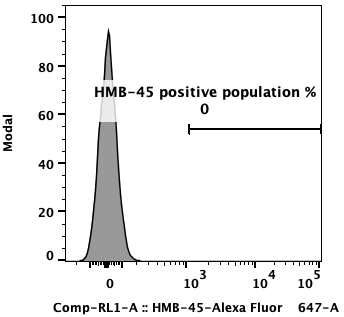
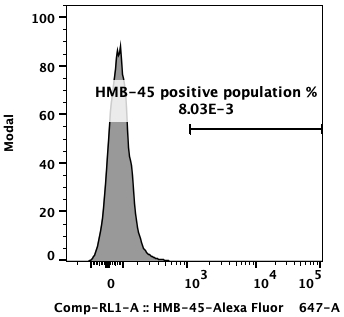
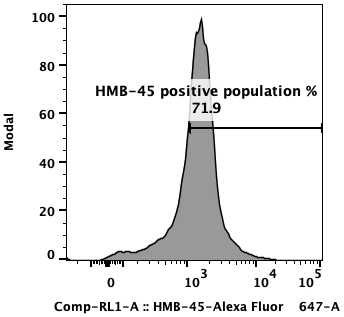
The percentage of HMB-45 expression in KY821 Cell Line was detected by flow cytometry to be approximately 71.9%.