



Tumor Cell Lines

LCLC-97TM1

  • For research use only

Cat No.

ABC-TC600S

Product Type

Human Lung Cancer Cell Lines

Species

Human

Growth Conditions

37 ℃, 5% CO2

Disease

Lung Cancer

Product Code

LCLC97TM1

LCLC-97TM1: Human large cell lung carcinoma cell line. Epithelial, adherent, integrates 1-2 copies of HPV16.

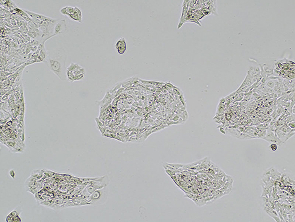
Product Image

Description

LCLC-97TM1 is a human non‑small‑cell lung cancer (NSCLC) cell line derived from a large cell lung carcinoma (LCLC) of a 44-year-old Caucasian male patient, originally xenografted into nude mice and subsequently cultured in vitro. Established from the first tumor passage, these adherent cells exhibit epithelial-like morphology with dense islet formation and indistinct borders. These cells contain large nuclei with prominent nucleoli and evenly dispersed chromatin, reflecting the undifferentiated phenotype. They do not attain full confluency in routine culture. LCLC-97TM1 displays a complex, abnormal karyotype indicative of high genomic instability typical of LCLC. They harbors a homozygous KRAS p.G12V activating mutation and heterozygous TP53 frameshift mutation (p.L35Cfs*9), hallmarks of NSCLC pathobiology. LCLC-97TM1 retains tumorigenicity in nude mice. This cell line serves as a relevant in vitro and in vivo model for investigating LCLC pathogenesis, tumor progression, and responses to therapeutic agents in non-small cell lung cancer (NSCLC).

Product Code

LCLC97TM1

Species

Human

Cat.No

ABC-TC600S

Product Category

Tumor Cell Lines

Size/Quantity

1 vial

Shipping Info

Dry Ice

Growth Conditions

37 ℃, 5% CO2

Disease

Lung Cancer

Biosafety Level

1

Storage

Liquid Nitrogen

Product Type

Human Lung Cancer Cell Lines

Application

  • LCLC‑97TM1 serves as a robust in vitro and in vivo model for studying large cell lung carcinoma (LCLC)—a subtype of NSCLC. It is particularly suitable for interrogating KRAS-driven oncogenic signaling, TP53-related dysregulation, genomic instability, and drug resistance mechanisms. The line supports xenograft models to evaluate candidate therapeutics and tumor response in immunodeficient mice.Its non-confluent, epithelioid growth and molecular profile make it suitable for high-content screening, KRAS-targeted agent testing, and tumor heterogeneity studies in lung cancer research

Citation

When you publish your research, please cite our product as “AcceGen Biotech Cat.# XXX-0000”. In return, we’ll give you a $200 coupon. Simply click here and submit your paper’s PubMed ID (PMID).

Frequently Asked Questions

  • What is the doubling time of LCLC-97TM1 cell line?

    The LCLC-97TM1 cell line has a doubling time of more than 50 hours.

  • What is LCLC-97TM1 Cell line?

    The LCLC-97TM1 cell line is originated from a primary tumor in a 44-year-old man with a large cell lung carcinoma (LCLC), which is a type of non-small cell lung cancer (NSCLC). This cell line is used in cancer research to study the biology of lung cancer, including aspects like tumor growth, metastasis, and drug resistance.

  • What is the culture condition of LCLC-97TM1 Cell line?

    The LCLC-97TM1 cell line has the following culture conditions:
    Temperature: Incubate at 37°C
    CO2 concentration: Incubate with 5% CO2
    Medium: Exchange the culture supernatant at least every second day
    Subculture: Split confluent cultures 1:3 to 1:5 once or twice a week using trypsin/EDTA
    Seed out: Seed out at approximately 2×10^6 cells/80cm2

Inquiring LCLC-97TM1

We know how valuable your research is to you, but are you wondering what you can expect to pay for quick accurate results every time? Fill out a request in the form below and we’ll get back to you within 24 hours with a quote.
High Viability
To succeed in cell culture
Precision and Reliability
To support a consistent result
Customization Options
Tailed to your research

Tags

AcceGen Scroll Top Button