



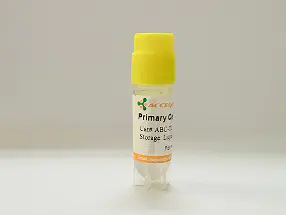
For research use only
| Cat No. | ABC-TC4112 |
| Product Type | Rat Primary Cells |
| Cell Type | Neuron |
| Species | Rat |
| Growth Conditions | 37 ℃, 5% CO2 |
| Source Organ | Brain |
| Disease | Normal |
| Storage | Liquid Nitrogen |
Rat Cerebellar Granular Cells are isolated from cerebellar cortex of adult Sprague Dawley rats at postnatal day 8.
| Product Code | Rat Cerebellum Neurons, Rat Cerebellar Neurons, Cerebellum Neurons |
| Species | Rat |
| Cat.No | ABC-TC4112 |
| Product Category | Primary Cells |
| Size/Quantity | 1 vial |
| Cell Type | Neuron |
| Growth Mode | Adherent |
| Shipping Info | Dry Ice |
| Growth Conditions | 37 ℃, 5% CO2 |
| Source Organ | Brain |
| Disease | Normal |
| Biosafety Level | 1 |
| Storage | Liquid Nitrogen |
| Product Type | Rat Primary Cells |
| Quality Control | All cells test negative for mycoplasma, bacteria, yeast, and fungi. |
Rat cerebellum neurons serve as an excellent in vitro model for studying cerebellar function, including motor coordination and synaptic communication. These cells are widely used in research related to neurodegenerative diseases, such as cerebellar ataxia and Parkinson’s disease. They are also valuable for investigating the mechanisms of neuroinflammation, neuronal excitability, and synaptic plasticity within cerebellar networks. Furthermore, these neurons are pivotal in studies of drug toxicity and neuroprotection, particularly for compounds targeting neuronal health in cerebellar-related disorders.
When you publish your research, please cite our product as “AcceGen Biotech Cat.# XXX-0000”. In return, we’ll give you a $200 coupon. Simply click here and submit your paper’s PubMed ID (PMID).
Our rat primary cerebellum neurons (ABC-TC4112) are a highly enriched granule neuron population. We have not specifically quantified Purkinje cells in this preparation. However, based on GABA immunostaining, the proportion of GABA-positive cells is <5%. Since Purkinje cells are GABAergic neurons, the overall granule neuron purity is >95%, with GABAergic cells (potentially including very few Purkinje cells) accounting for less than 5%.