



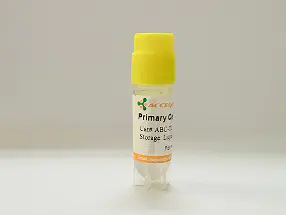
For research use only
| Cat No. | ABC-TC4185 |
| Product Type | Rat Primary Cells |
| Cell Type | Osteoblast |
| Species | Rat |
| Growth Conditions | 37 ℃, 5% CO2 |
| Source Organ | Bone |
| Disease | Normal |
| Storage | Liquid Nitrogen |
Rat Osteoblasts (ROb) are isolated from rat bone and are cryopreserved at second passage.
Rat Osteoblasts are primarily isolated from rat bone tissues. These cells exhibit a characteristic polygonal or spindle-shaped morphology with a cuboidal appearance when actively depositing bone matrix, and they form adherent, monolayer cultures with prominent nucleoli and basophilic cytoplasm. Functionally, rat osteoblasts synthesize and mineralize bone matrix, regulate calcium-phosphate homeostasis, and interact with osteoclasts to maintain bone remodeling balance. They are crucial in studies of osteoporosis, fracture healing, and bone metabolic disorders. To ensure the quality of these primary cells, repeated freeze-thaw cycles are not recommended due to the fragile nature of these cells. Each lot undergoes rigorous screening and isolation procedures, and is rigorously tested to ensure it is free of contamination from Mycoplasma, Fungi, Yeast, and Bacteria.
| Product Code | Rat Osteoblasts, Rat Bone Osteoblasts, Osteoblast Cells |
| Species | Rat |
| Cat.No | ABC-TC4185 |
| Product Category | Primary Cells |
| Size/Quantity | 1 vial |
| Cell Type | Osteoblast |
| Growth Mode | Adherent |
| Shipping Info | Dry Ice |
| Growth Conditions | 37 ℃, 5% CO2 |
| Source Organ | Bone |
| Disease | Normal |
| Biosafety Level | 1 |
| Storage | Liquid Nitrogen |
| Product Type | Rat Primary Cells |
| Quality Control | All cells test negative for mycoplasma, bacteria, yeast, and fungi. |
Rat Osteoblasts are widely used in biomedical research due to their relevance in studying bone formation, regeneration, and metabolic disorders. In drug discovery, they serve as a primary model for screening osteogenic compounds, such as bisphosphonates for osteoporosis or novel anabolic agents like parathyroid hormone (PTH) analogs. In biomaterial testing, these cells assess the biocompatibility and osteoinductive potential of scaffolds for bone tissue engineering, including hydroxyapatite-based ceramics and polymer composites.
When you publish your research, please cite our product as “AcceGen Biotech Cat.# XXX-0000”. In return, we’ll give you a $200 coupon. Simply click here and submit your paper’s PubMed ID (PMID).