



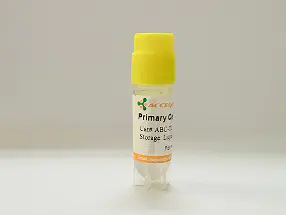
For research use only
| Cat No. | ABC-TC4202 |
| Product Type | Rat Primary Cells |
| Cell Type | Fibroblast |
| Species | Rat |
| Growth Conditions | 37 ℃, 5% CO2 |
| Source Organ | Pulmonary Artery |
| Disease | Normal |
| Storage | Liquid Nitrogen |
Rat Primary Pulmonary Artery Fibroblasts from AcceGen are isolated from tissue of neonatal Sprague-Dawley Rats.
Rat Pulmonary Artery Fibroblasts (RPAFs) are isolated from the adventitial layer of the pulmonary artery in rats. These cells are a key component of vascular connective tissue and play a crucial role in maintaining vascular structure and function. RPAFs are crucial in synthesizing and remodeling extracellular matrix (ECM) components, including collagen and elastin, thereby contributing to vascular integrity and repair. They also participate in paracrine signaling, releasing cytokines and growth factors that modulate vascular tone and inflammation. These cells highly express Vimentin. To ensure the quality of these primary cells, repeated freeze-thaw cycles are not recommended due to the fragile nature of these cells. Each lot undergoes rigorous screening and isolation procedures, and is rigorously tested to ensure it is free of contamination from Mycoplasma, Fungi, Yeast, and Bacteria.
| Product Code | Rat Pulmonary Artery Fibroblasts, Rat Pulmonary Arterial Fibroblasts, PA Fibroblasts |
| Species | Rat |
| Cat.No | ABC-TC4202 |
| Product Category | Primary Cells |
| Size/Quantity | 1 vial |
| Cell Type | Fibroblast |
| Growth Mode | Adherent |
| Shipping Info | Dry Ice |
| Growth Conditions | 37 ℃, 5% CO2 |
| Source Organ | Pulmonary Artery |
| Disease | Normal |
| Biosafety Level | 1 |
| Storage | Liquid Nitrogen |
| Product Type | Rat Primary Cells |
| Quality Control | All cells test negative for mycoplasma, bacteria, yeast, and fungi. |
Rat Pulmonary Artery Fibroblasts (RPAFs) are widely used as an in vitro model to study vascular remodeling, fibrosis, and pulmonary hypertension. Their ability to transition into myofibroblasts under pathological conditions makes them particularly valuable for investigating mechanisms of pulmonary arterial hypertension (PAH), where excessive extracellular matrix (ECM) deposition leads to vascular stiffening and right heart failure.
When you publish your research, please cite our product as “AcceGen Biotech Cat.# XXX-0000”. In return, we’ll give you a $200 coupon. Simply click here and submit your paper’s PubMed ID (PMID).