



For research use only
| Cat No. | ABC-TC0970 |
| Product Type | Rat Pancreas Cancer Cell Lines |
| Cell Type | Epithelial |
| Species | Rattus Norvegicus |
| Growth Conditions | 37 ℃, 5% CO2 |
| Source Organ | Pancreas |
| Disease | Insulinoma |
| Product Code | RIN m5F; Rin-M-5F; Rin-m-5F; RIN-m 5F; RINm-5F; RINm5F; RIN-m clone 5F; RIN Cl-5F; RIN-5F; Rin-5F; RIN 5F; RIN5F; m5F; 5F |
RIN-5F rat pancreatic β-cell tumor line shows epithelial morphology, expresses insulin and GLUT2, ideal for diabetes and oxidative stress research.
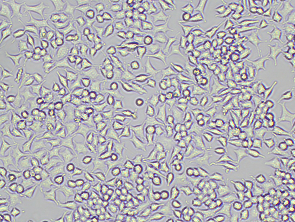
RIN-5F is a rat pancreatic β-cell tumor cell line derived from the x‑ray‑induced insulinoma in a male NEDH strain rat. As a secondary clone of RIN‑m, RIN‑5F exhibits epithelial-like morphology and adherent growth forming small island‑like clusters. The cells secrete insulin robustly and express high levels of L‑dopa‑decarboxylase, characteristic of amine precursor uptake and decarboxylation (APUD) phenotype. Functionally, RIN‑5F retains glucose-responsive insulin secretion via expressed GLUT2 transporters and β‑cell transcriptional machinery. A novel mutation p. T487A in the death domain-associated protein (DAXX) gene has recently been identified, potentially implicating chromatin dynamics in its X-ray‑induced tumor origin. Due to these features, RIN-5F is widely used in diabetes research, particularly in studies related to oxidative stress, drug protection mechanisms, and genetic modifications.
| Product Code | RIN m5F; Rin-M-5F; Rin-m-5F; RIN-m 5F; RINm-5F; RINm5F; RIN-m clone 5F; RIN Cl-5F; RIN-5F; Rin-5F; RIN 5F; RIN5F; m5F; 5F |
| Species | Rattus Norvegicus |
| Cat.No | ABC-TC0970 |
| Product Category | Tumor Cell Lines |
| Size/Quantity | 1 vial |
| Cell Type | Epithelial |
| Growth Mode | Adherent |
| Shipping Info | Dry Ice |
| Growth Conditions | 37 ℃, 5% CO2 |
| Source Organ | Pancreas |
| Disease | Insulinoma |
| Biosafety Level | 1 |
| Storage | Liquid Nitrogen |
| Product Type | Rat Pancreas Cancer Cell Lines |
RIN-5F cells serve as a valuable model for investigating pancreatic islet cell biology. They provide an effective platform for studying the mechanisms governing the synthesis, storage, and secretion of insulin and somatostatin, offering critical insights into endocrine regulation. This cell line’s physiological relevance makes it a powerful tool for research on diabetes, pancreatic islet function and other associated diseases including neuroendocrine tumors.
When you publish your research, please cite our product as “AcceGen Biotech Cat.# XXX-0000”. In return, we’ll give you a $200 coupon. Simply click here and submit your paper’s PubMed ID (PMID).