- In-Stock Tumor Cell Lines
- Human Orbital Fibroblasts
- Human Microglia
- Human Pulmonary Alveolar Epithelial Cells
- Human Colonic Fibroblasts
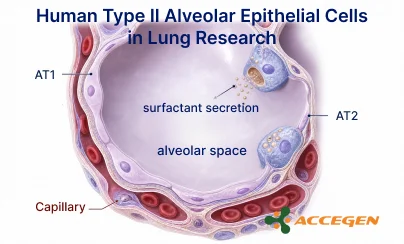
- Human Type II Alveolar Epithelial Cells
- Human Valvular Interstitial Cells
- Human Thyroid Epithelial Cells
- C57BL/6 Mouse Dermal Fibroblasts
- Human Alveolar Macrophages
- Human Dermal Fibroblasts, Adult
- Human Lung Fibroblasts, Adult
- Human Retinal Muller Cells
- Human Articular Chondrocytes
- Human Retinal Pigment Epithelial Cells
- Human Pancreatic Islets of Langerhans Cells
- Human Kidney Podocyte Cells
- Human Renal Proximal Tubule Cells
Mesenchymal Stem Cells (MSCs) are among the most extensively studied adult stem cell populations in biomedical research. Their capacity for self-renewal, multilineage differentiation, and immunomodulatory activity has made them one of the most widely used cell models in regenerative medicine, tissue engineering, disease modeling, and drug discovery. Due to their accessibility, expansion capability, and diverse biological functions, MSCs have become an essential tool for both basic research and preclinical studies.
Biological Characteristics of Mesenchymal Stem Cells
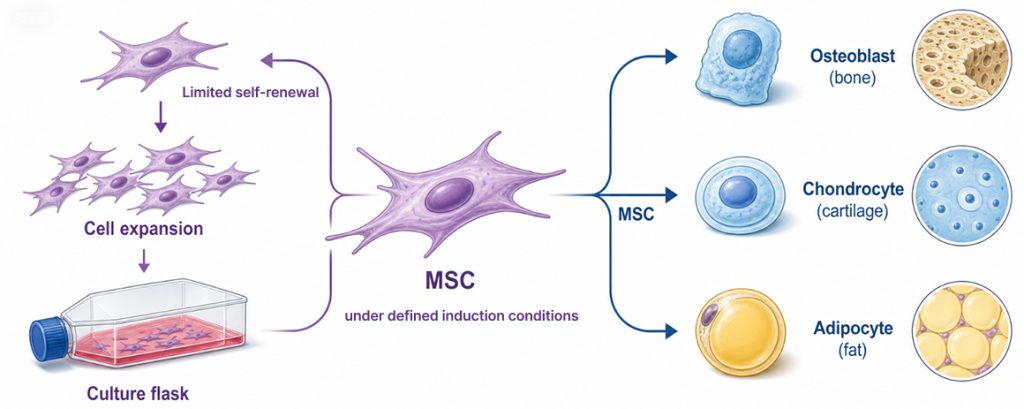
MSCs exhibit unique biological properties that support their broad applications in scientific research. Under appropriate in vitro culture conditions, MSCs can differentiate into osteoblasts, adipocytes, and chondroblasts, representing their trilineage differentiation potential.
Beyond differentiation capacity, MSCs play important roles in regulating tissue repair and immune responses. They secrete a variety of cytokines, growth factors, chemokines, and extracellular vesicles that contribute to tissue regeneration and immune regulation primarily through paracrine mechanisms.
According to the International Society for Cell & Gene Therapy (ISCT), cultured MSCs should express specific positive surface markers, including CD73, CD90, and CD105, while lacking the expression of hematopoietic and immune cell markers such as CD34, CD45, CD14/CD11b, CD79α/CD19, and HLA-DR. These characteristics are widely used for MSC identification and quality evaluation.
Selecting the Right MSC Source for Research
MSCs can be isolated from various human tissues, and different sources exhibit distinct biological characteristics that may influence experimental outcomes.
| MSC Source | Biological Characteristics | Common Applications |
| Bone Marrow | Strong osteogenic differentiation capacity | Bone regeneration, orthopedic research |
| Adipose Tissue | High cell yield and rapid proliferation | Regenerative medicine, metabolic disease research |
| Umbilical Cord | Primitive phenotype and potent immunomodulatory activity | Immunology, inflammation, tissue repair |
Choosing an appropriate MSC source according to research objectives is essential for improving experimental consistency and obtaining meaningful results.
Human MSC Products from AcceGen
AcceGen provides a broad portfolio of human Mesenchymal Stem Cells (MSCs) isolated from multiple tissue sources to support diverse research applications. Available products include Human Bone Marrow Mesenchymal Stem Cells, Human Adipose-Derived Mesenchymal Stem Cells, and Human Umbilical Cord Mesenchymal Stem Cells.
Each product is supplied with quality control documentation, including sterility testing, viability assessment, morphology evaluation, and marker characterization to support reproducible in vitro research.
Whether investigating regenerative medicine, immune regulation, disease mechanisms, or drug development, selecting a well-characterized MSC model is an important foundation for generating robust and reproducible experimental results.
AcceGen provides a broad selection of human Mesenchymal Stem Cells (MSCs) from different tissue sources to support regenerative medicine, immunology, and disease research.
| Product | Source | Applications |
| Human Bone Marrow Mesenchymal Stem Cells | Bone Marrow | Bone regeneration, cartilage research, tissue engineering |
| Human Adipose-Derived Mesenchymal Stem Cells | Adipose Tissue | Regenerative medicine, metabolic research, cell therapy studies |
| Human Umbilical Cord Mesenchymal Stem Cells | Umbilical Cord | Immunology, inflammation research, tissue repair |

Copyright - Unless otherwise stated all contents of this website are AcceGen™ All Rights Reserved – Full details of the use of materials on this site please refer to AcceGen Editorial Policy – Guest Posts are welcome, by submitting a guest post to AcceGen you are agree to the AcceGen Guest Post Agreement – Any concerns please contact marketing@accegen.com