

- In-Stock Tumor Cell Lines
- Human Orbital Fibroblasts
- Human Microglia
- Human Pulmonary Alveolar Epithelial Cells
- Human Colonic Fibroblasts
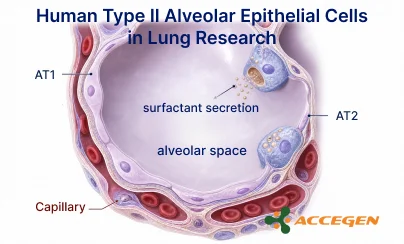
- Human Type II Alveolar Epithelial Cells
- Human Valvular Interstitial Cells
- Human Thyroid Epithelial Cells
- C57BL/6 Mouse Dermal Fibroblasts
- Human Alveolar Macrophages
- Human Dermal Fibroblasts, Adult
- Human Lung Fibroblasts, Adult
- Human Retinal Muller Cells
- Human Articular Chondrocytes
- Human Retinal Pigment Epithelial Cells
- Human Pancreatic Islets of Langerhans Cells
- Human Kidney Podocyte Cells
- Human Renal Proximal Tubule Cells
Tumor cell lines are among the most widely used models in cancer research. Derived from human and animal tumor tissues, they are adapted for long-term continuous culture in laboratory environments. As a core type of research cell lines, they serve as reliable tools for researchers to study tumor biology, assess drug responses, and uncover the molecular mechanisms behind cancer progression.
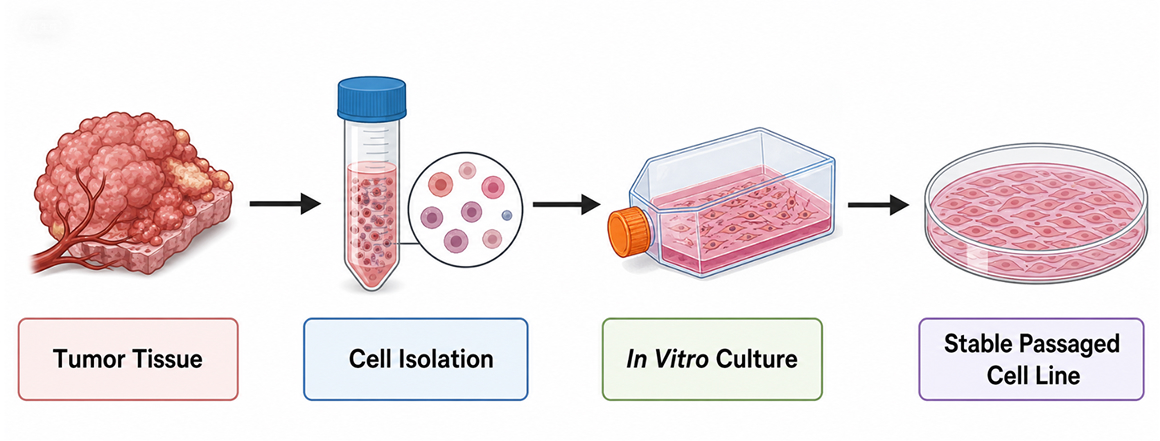
How Are Tumor Cell Lines Established?
Tumor cell lines are typically established by isolating cells from tumor tissues and culturing them under controlled laboratory conditions. Over time, selected cells adapt to the in vitro environment and gain the capacity for indefinite proliferation. These cancer cell lines for research can then be expanded, characterized, and cryopreserved for long-term oncology research.
Researchers have developed extensive collections of cancer models, including breast, lung, colorectal, and liver cancer cell lines, enabling scientists to study disease-specific biological traits and therapeutic effects.
Characteristics of Tumor Cell Lines
Tumor cell lines are characterized by rapid proliferation, cancer-associated genetic mutations, and stable growth performance even after repeated cell passages. Thanks to these properties, they have become well-recognized in vitro cancer models across various research fields.
Commonly used examples include the breast cancer cell line MDA-MB-231, the lung cancer cell line A549, and the colon cancer cell line HCT116, each representing distinct molecular features and research applications.
Advantages of Tumor Cell Lines in Research
One of the primary advantages of tumor cell lines is their reproducibility. Researchers can perform standardized experiments using consistent cell populations, making results easier to compare across laboratories and studies.
Other advantages include low maintenance costs, fast cell expansion and compatibility with high-throughput drug screening. Meanwhile, abundant molecular characterization data of these cell lines is publicly available. These strengths make cancer cell lines for research indispensable tools for target discovery, biomarker identification, and therapeutic development.
Limitations of Cancer Cell Lines
Despite their value, cancer cell lines have important limitations. Long-term culture may lead to genetic drift and phenotypic alterations that differ from the original tumor. Furthermore, conventional two-dimensional cultures cannot fully reproduce the complexity of the tumor microenvironment.
When evaluating in vitro tumor models advantages disadvantages variables and selecting the right platform, researchers must consider factors such as tumor heterogeneity, cell-cell interactions, and experimental objectives. To address these challenges, many studies now incorporate three dimensional in vitro tumor models for cancer research and drug evaluation, organoids, and patient-derived models alongside traditional cell lines.
Applications in Cancer Research
Tumor cell lines are widely used preclinical cancer models in oncology research and drug development.
Researchers use them to study:
- Tumor growth
- Cell signaling pathways
- Gene regulation
- Cancer metastasis
- Drug resistance
- Therapeutic responses
Resources such as the Cancer Cell Line Encyclopedia (CCLE) provide valuable genomic data for cancer research, while the Human Protein Atlas supports biomarker discovery and target validation.
Scientists also utilize mouse cancer cell lines alongside human models to better understand disease mechanisms and evaluate potential therapies.
Choosing the Right Tumor Cell Model
Because no single model fully represents every aspect of cancer biology, selecting the appropriate platform depends on the research objective. Traditional tumor cell lines remain highly effective for mechanistic studies and drug screening, while advanced three dimensional in vitro tumor models for cancer research and drug evaluation may better replicate physiological tumor behavior.
Combining multiple preclinical cancer models often provides a more comprehensive understanding of tumor biology and therapeutic responses.
Conclusion
Tumor cell lines are powerful and widely adopted human tumor cell lines that continue to support advances in oncology research and drug development. Although they cannot fully replicate human tumors, integrating traditional cancer cell lines for research with emerging preclinical cancer models and advanced three dimensional in vitro tumor models for cancer research and drug evaluation can improve experimental relevance and accelerate the development of innovative cancer therapies.

Copyright - Unless otherwise stated all contents of this website are AcceGen™ All Rights Reserved – Full details of the use of materials on this site please refer to AcceGen Editorial Policy – Guest Posts are welcome, by submitting a guest post to AcceGen you are agree to the AcceGen Guest Post Agreement – Any concerns please contact marketing@accegen.com