- In-Stock Tumor Cell Lines
- Human Orbital Fibroblasts
- Human Microglia
- Human Pulmonary Alveolar Epithelial Cells
- Human Colonic Fibroblasts
- Human Type II Alveolar Epithelial Cells
- Human Valvular Interstitial Cells
- Human Thyroid Epithelial Cells
- C57BL/6 Mouse Dermal Fibroblasts
- Human Alveolar Macrophages
- Human Dermal Fibroblasts, Adult
- Human Lung Fibroblasts, Adult
- Human Retinal Muller Cells
- Human Articular Chondrocytes
- Human Retinal Pigment Epithelial Cells
- Human Pancreatic Islets of Langerhans Cells
- Human Kidney Podocyte Cells
- Human Renal Proximal Tubule Cells
Introduction
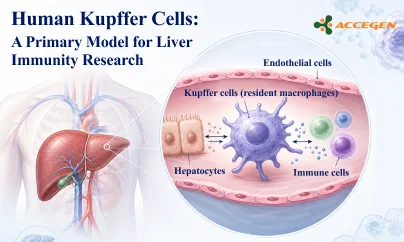
The liver plays essential roles in metabolism, detoxification, and immune regulation. Among liver immune populations, Kupffer cells (KCs) are specialized liver-resident macrophages located within hepatic sinusoids and serve as key regulators of liver homeostasis and immune responses.
Human Kupffer cells are widely used as a primary cell model for studying liver inflammation, immune regulation, drug-induced liver injury (DILI), and metabolic liver disorders. Compared with immortalized macrophage cell lines, primary human Kupffer cells better retain important macrophage characteristics and provide a more physiologically relevant model for investigating human liver biology.
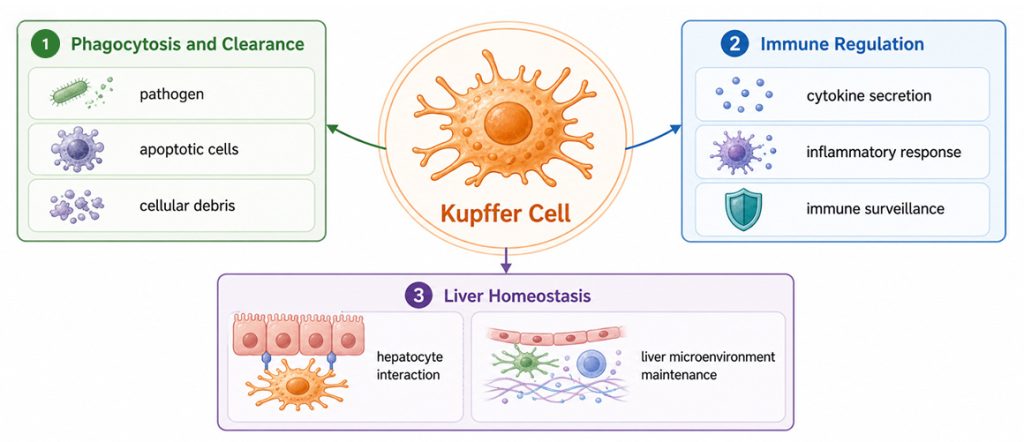
Biological Functions of Human Kupffer Cells
Kupffer cells are essential components of the liver’s innate immune system. They express characteristic macrophage markers, including CD14, CD68, and CD163, as well as immune-related receptors such as Toll-like receptors (TLRs) and complement receptors.
Their major biological functions include:
- Phagocytosis and clearance: Kupffer cells remove pathogens, apoptotic cells, and cellular debris through their strong phagocytic activity, contributing to liver tissue maintenance and immune defense.
- Immune surveillance and regulation: Kupffer cells recognize external stimuli and regulate hepatic immune responses through the production of cytokines, chemokines, and other inflammatory mediators.
- Maintenance of liver homeostasis: Through interactions with hepatocytes, hepatic stellate cells, endothelial cells, and other immune cells, Kupffer cells help maintain a balanced hepatic microenvironment.
Applications in Liver Disease and Inflammation Research
Dysregulated activation of Kupffer cells is closely associated with the development and progression of various liver disorders. Human Kupffer cells provide a valuable research model for investigating disease-related mechanisms, including:
- Non-alcoholic fatty liver disease (NAFLD): Studying macrophage activation, inflammatory signaling pathways, and immune responses associated with metabolic liver disorders.
- Drug-induced liver injury (DILI): Investigating immune-mediated mechanisms involved in drug-related hepatic inflammation and toxicity responses.
- Liver inflammation and fibrosis-associated research: Exploring macrophage activation, cytokine signaling, and interactions between immune cells and other hepatic cell types involved in fibrosis progression.
By analyzing Kupffer cell responses to different biological stimuli, researchers can gain insights into liver immune regulation and identify potential mechanisms involved in liver disease development.
Advantages of Primary Human Kupffer Cells
Primary human Kupffer cells provide greater physiological relevance compared with immortalized macrophage models. They retain important macrophage characteristics, immune-related functions, and responses associated with the liver microenvironment, making them valuable tools for liver immunology and inflammation research.
AcceGen provides high-quality Human Kupffer Cells (ABC-TC4369) isolated from human liver tissue. These cells are quality-tested and designed to support research applications in liver immunology, inflammatory mechanisms, drug response studies, and liver disease-related investigations.
Conclusion
Human Kupffer cells are an important primary cell model for advancing liver biology research. Their unique role in immune regulation, inflammatory responses, and liver homeostasis makes them valuable for studying hepatic immune mechanisms, metabolic liver disorders, and drug-related liver responses.
By providing physiologically relevant human cell models, primary Kupffer cells continue to support discoveries in liver research and contribute to a better understanding of hepatic immune function and disease-associated mechanisms.

Copyright - Unless otherwise stated all contents of this website are AcceGen™ All Rights Reserved – Full details of the use of materials on this site please refer to AcceGen Editorial Policy – Guest Posts are welcome, by submitting a guest post to AcceGen you are agree to the AcceGen Guest Post Agreement – Any concerns please contact marketing@accegen.com