- In-Stock Tumor Cell Lines
- Human Orbital Fibroblasts
- Human Microglia
- Human Pulmonary Alveolar Epithelial Cells
- Human Colonic Fibroblasts
- Human Type II Alveolar Epithelial Cells
- Human Valvular Interstitial Cells
- Human Thyroid Epithelial Cells
- C57BL/6 Mouse Dermal Fibroblasts
- Human Alveolar Macrophages
- Human Dermal Fibroblasts, Adult
- Human Lung Fibroblasts, Adult
- Human Retinal Muller Cells
- Human Articular Chondrocytes
- Human Retinal Pigment Epithelial Cells
- Human Pancreatic Islets of Langerhans Cells
- Human Kidney Podocyte Cells
- Human Renal Proximal Tubule Cells
Introduction
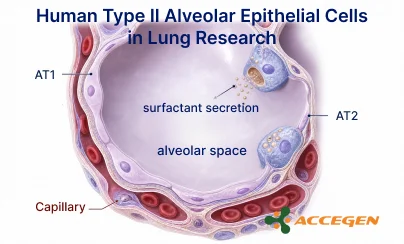
Human Type II Alveolar Epithelial Cells (AT2 cells) are specialized epithelial cells located in the alveoli of the lung parenchyma. Although they account for only a small proportion of alveolar surface area, AT2 cells play a critical role in maintaining pulmonary homeostasis.
Beyond producing pulmonary surfactant, AT2 cells are increasingly recognized for their role in alveolar repair and regeneration. Their dysfunction has been associated with several respiratory diseases, including pulmonary fibrosis, interstitial lung disease (ILD), and chronic lung disease, making them an important model for lung research.
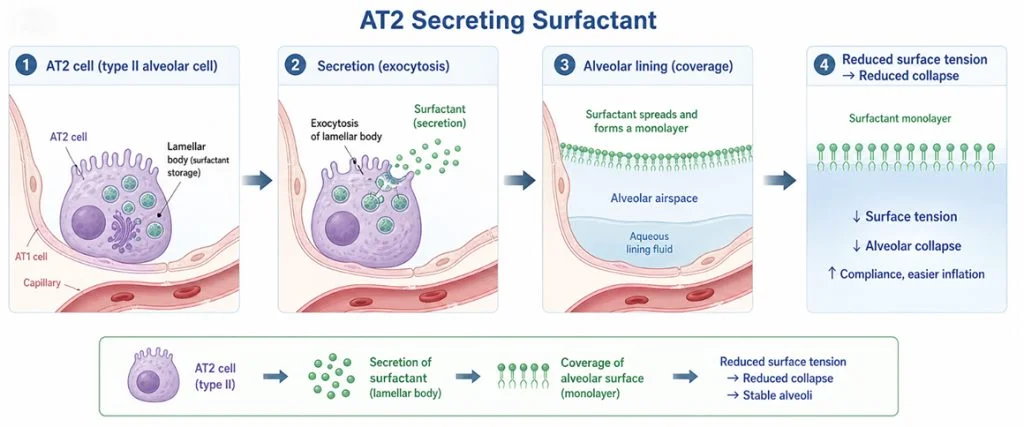
Key Biological Functions of AT2 Cells
The primary function of AT2 cells is the synthesis and secretion of pulmonary surfactant, which reduces alveolar surface tension and prevents alveolar collapse during breathing.
Following lung injury, AT2 cells can proliferate and differentiate into Type I alveolar epithelial cells, contributing to epithelial repair and tissue regeneration. AT2 cells are commonly identified by the expression of markers such as SFTPC, SFTPB, ABCA3, and EPCAM.
Applications in Pulmonary Disease Research
AT2 cells are widely used in respiratory disease studies due to their central role in alveolar integrity and injury response.
Major applications include:
- Pulmonary fibrosis research
- Interstitial lung disease (ILD) studies, including investigations of different stages of interstitial lung disease
- Acute lung injury and ARDS models
- Respiratory viral infection research
- COPD and emphysema studies
- Drug screening and toxicity evaluation
- Development of novel approaches for interstitial lung disease treatment
In pulmonary fibrosis, AT2 cell dysfunction, cellular senescence, and abnormal repair responses are believed to contribute to disease progression. Researchers are also exploring whether certain forms of pulmonary fibrosis may involve hereditary or genetic risk factors.
Emerging Research Applications
Recent advances in stem cell biology and organoid technology have expanded the use of AT2 cells in translational research. AT2 cells are increasingly utilized in:
- Lung organoid development
- Disease modeling platforms
- Drug discovery and screening
- Regenerative medicine research
These advanced models better mimic the alveolar microenvironment and provide valuable tools for studying respiratory diseases and evaluating therapeutic candidates.
Conclusion
Human Type II Alveolar Epithelial Cells (AT2 cells) are essential for surfactant production, alveolar maintenance, and epithelial regeneration. Their involvement in pulmonary fibrosis, interstitial lung disease, and COPD makes them a critical model for pulmonary research. As lung biology and regenerative medicine continue to advance, AT2 cells will remain an important tool for understanding disease mechanisms and developing innovative therapies.

Copyright - Unless otherwise stated all contents of this website are AcceGen™ All Rights Reserved – Full details of the use of materials on this site please refer to AcceGen Editorial Policy – Guest Posts are welcome, by submitting a guest post to AcceGen you are agree to the AcceGen Guest Post Agreement – Any concerns please contact marketing@accegen.com