

- In-Stock Tumor Cell Lines
- Human Orbital Fibroblasts
- Human Microglia
- Human Pulmonary Alveolar Epithelial Cells
- Human Colonic Fibroblasts
- Human Type II Alveolar Epithelial Cells
- Human Valvular Interstitial Cells
- Human Thyroid Epithelial Cells
- C57BL/6 Mouse Dermal Fibroblasts
- Human Alveolar Macrophages
- Human Dermal Fibroblasts, Adult
- Human Lung Fibroblasts, Adult
- Human Retinal Muller Cells
- Human Articular Chondrocytes
- Human Retinal Pigment Epithelial Cells
- Human Pancreatic Islets of Langerhans Cells
- Human Kidney Podocyte Cells
- Human Renal Proximal Tubule Cells
Introduction
Pancreatic beta cells play a critical role in maintaining glucose homeostasis by producing and secreting insulin. Dysfunction or loss of pancreatic beta cell function is closely associated with diabetes development, making reliable human beta cell models essential for understanding disease mechanisms and evaluating potential therapeutic approaches.
Traditional models, such as immortalized cell lines and animal models, have contributed significantly to diabetes research. However, differences between these models and human pancreatic biology may limit their ability to fully represent human disease processes. Human induced pluripotent stem cell (iPSC)-derived pancreatic beta cells provide a promising alternative by combining human origin, differentiation potential, and improved physiological relevance compared with conventional models.
What Are iPSC-Derived Pancreatic Beta Cells?
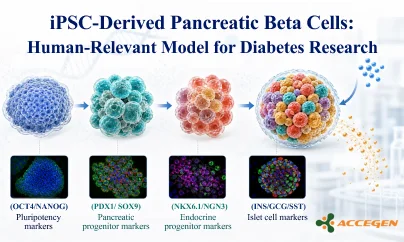
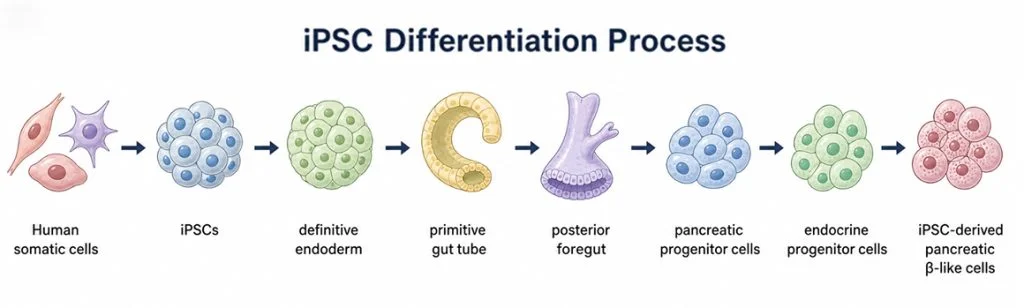
Induced pluripotent stem cells (iPSCs) are generated by reprogramming mature somatic cells into a pluripotent state. Through controlled induced pluripotent stem cell differentiation, human iPSCs can be guided to develop into specialized cell types, including insulin-producing pancreatic beta cells.
iPSC-derived pancreatic beta cells exhibit key beta cell characteristics, including insulin expression and glucose-responsive insulin secretion. However, their maturation status may vary depending on differentiation protocols, culture conditions, and maturation strategies. These characteristics make them valuable human beta cell models for studying insulin secretion regulation, pancreatic biology, beta cell dysfunction, and diabetes-related mechanisms.
Applications of iPSC-Derived Pancreatic Beta Cells
Diabetes Disease Modeling
Human iPSC-derived pancreatic beta cells provide a more physiologically relevant platform for investigating diabetes-related cellular changes. Researchers can use these models to study beta cell dysfunction, impaired glucose-stimulated insulin secretion (GSIS), and molecular mechanisms involved in disease progression.
Patient-derived iPSCs further enable the exploration of patient-specific disease phenotypes, particularly for genetic forms of diabetes and mechanisms associated with beta cell dysfunction. These approaches provide valuable tools for human disease modeling and understanding disease-associated cellular pathways.
Drug Discovery and Functional Screening
Reliable human cell models are important for evaluating potential therapeutic compounds. iPSC-derived pancreatic beta cells can support compound screening and functional evaluation by enabling researchers to assess effects on insulin secretion, beta cell survival, and cellular responses.
Functional assays, including insulin secretion assays, can provide quantitative insights into glucose responsiveness and potential compound effects. Therefore, iPSC-derived pancreatic beta cells represent a valuable cell model for drug screening and mechanism-based evaluation.
Pancreatic Development and Regenerative Medicine Research
The differentiation process from iPSCs to pancreatic beta cells provides insights into human pancreatic endocrine development. These models allow researchers to investigate signaling pathways, transcription factors, and cellular mechanisms involved in beta cell formation, maturation, and functional regulation.
By providing renewable human cell sources, iPSC-derived beta cell models support the development of regenerative medicine approaches and advance the understanding of beta cell replacement strategies.
Advantages Compared with Traditional Models
| Model | Advantages |
| Immortalized cell lines | Easy culture and high reproducibility |
| Primary pancreatic beta cells | High biological relevance but limited availability |
| Animal models | Useful for systemic studies but may have species differences |
| iPSC-derived pancreatic beta cells | Human origin, renewable supply, and potential for disease modeling and functional studies |
Compared with conventional models, iPSC-derived pancreatic beta cells provide a valuable balance between human relevance and experimental accessibility. Their renewable nature and human-specific characteristics make them useful tools for disease modeling, functional analysis, and biological research applications.
HighQC Pancreatic Beta Cells Derived from Human iPSC
AcceGen provides HighQC Pancreatic Beta Cells Derived from Human Induced Pluripotent Stem Cell (ABC-SC2113) as a specialized human iPSC-derived cell model for diabetes research, pancreatic biology studies, and functional evaluation applications.
This human iPSC-derived beta cell model provides researchers with a reliable platform for investigating beta cell-related mechanisms, performing functional assays, evaluating candidate compounds, and developing advanced in vitro research systems.
Conclusion
Human iPSC-derived pancreatic beta cells represent an important advancement in stem cell research by providing a human-relevant model for studying diabetes, investigating pancreatic biology, and evaluating potential therapeutic strategies.
With continued improvements in stem cell differentiation and maturation technologies, these iPSC-derived cells for research are expected to support further progress in human disease modeling, regenerative medicine approaches, and advanced drug discovery platforms.

Copyright - Unless otherwise stated all contents of this website are AcceGen™ All Rights Reserved – Full details of the use of materials on this site please refer to AcceGen Editorial Policy – Guest Posts are welcome, by submitting a guest post to AcceGen you are agree to the AcceGen Guest Post Agreement – Any concerns please contact marketing@accegen.com