



For research use only
| Cat No. | ABC-TC0102 |
| Product Type | Human Colon Cancer Cell Lines |
| Cell Type | Epithelial |
| Species | Human |
| Growth Conditions | 37 ℃, 5% CO2 |
| Source Organ | Colon |
| Disease | Colonic Adenocarinoma |
| Product Code | CACO-2; Caco 2; CACO 2; CACO2; CaCo2; CaCO2; Caco2; Caco-2/ATCC; Caco-II |
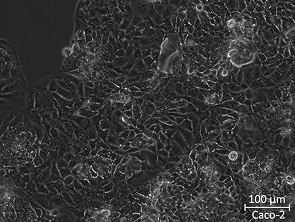
Caco-2 colon cancer cells form cobblestone monolayers,differentiate into enterocyte-like cells with microvilli, low tumorigenicity, suited for absorption.
Caco-2 is a human epithelial tumor cell line derived from a primary colorectal adenocarcinoma of a 72-year-old Caucasian male patient. Originating from the colon, Caco-2 cells grow as an adherent monolayer with cobblestone-like morphology. Caco-2 cells form tight junctions and express brush border enzymes, mimicking the small intestine’s absorptive properties. The cells express retinoic acid binding protein I, retinol binding protein II, and keratin, showing increased alkaline phosphatase activity during differentiation. Genetically, they harbor a TP53 p. Gly245Ala (c. 733G>C) mutation in exon 5, which disrupts the protein’s phosphorylation recognition motif. Although derived from cancer tissue, Caco-2 cells are considered non-tumorigenic in immunodeficient mice. Caco-2 cells are ideal for studying drug absorption, nutrient transport, and intestinal permeability due to their ability to form high-resistance polarized monolayers.
| Product Code | CACO-2; Caco 2; CACO 2; CACO2; CaCo2; CaCO2; Caco2; Caco-2/ATCC; Caco-II |
| Species | Human |
| Cat.No | ABC-TC0102 |
| Product Category | Tumor Cell Lines |
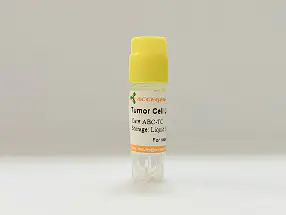
| Size/Quantity | 1 vial |
| Cell Type | Epithelial |
| Growth Mode | Adherent |
| Shipping Info | Dry Ice |
| Growth Conditions | 37 ℃, 5% CO2 |
| Source Organ | Colon |
| Disease | Colonic Adenocarinoma |
| Biosafety Level | 1 |
| Storage | Liquid Nitrogen |
| Product Type | Human Colon Cancer Cell Lines |
Caco-2 cells are widely used as an intestinal epithelial barrier model. One significant application is their use in predicting intestinal drug permeability. Caco-2 monolayers are aligned with in vivo transport pathways, evaluating their similarities. Additionally, Caco-2 monolayers serve as a benchmark for absorption prediction models of drug absorption. Overall, Caco-2 monolayers are valuable for identifying drugs with potential absorption issues and selecting optimal drug candidates with desirable passive permeability traits during drug discovery programs.
When you publish your research, please cite our product as “AcceGen Biotech Cat.# XXX-0000”. In return, we’ll give you a $100 coupon. Simply click here and submit your paper’s PubMed ID (PMID).