



For research use only
| Cat No. | ABC-TC0337 |
| Product Type | Human Colon Cancer Cell Lines |
| Cell Type | Epithelial |
| Species | Human |
| Growth Conditions | 37 ℃, 5% CO2 |
| Product Code | HCT116, HCT 116, hct-116 |
HCT-116 cell line is a widely used human colorectal carcinoma model for cancer research, drug testing, and molecular signaling pathway studies.
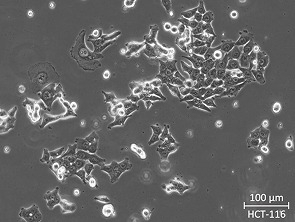
HCT116 is a human colorectal carcinoma cell line derived from a primary tumor of an adult male patient. These cells grow adherently in vitro, exhibiting epithelial-like cobblestone morphology and can be continuously passaged. HCT116 cells are characterized by microsatellite instability (MSI) caused by defects in DNA mismatch repair genes, particularly involving MLH1. They express typical epithelial markers such as cytokeratins and E-cadherin, consistent with their colon epithelial origin. HCT-116 also expresses transforming growth factor beta 1 (TGF-β1) and beta 2 (TGF-β2). At the molecular level, HCT116 cells harbor oncogenic mutations including an activating KRAS mutation while maintaining wild-type TP53, contributing to their tumorigenic potential. With a high proliferative capacity, this cell line is widely used in colorectal cancer research to study tumor biology, drug response, and mechanisms of chemoresistance. The genetic and phenotypic characteristics of HCT116 make it a valuable model for preclinical therapeutic development.
| Product Code | HCT116, HCT 116, hct-116 |
| Species | Human |
| Cat.No | ABC-TC0337 |
| Product Category | Tumor Cell Lines |
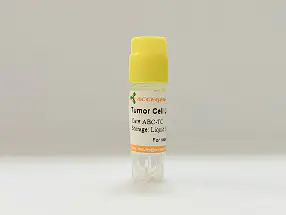
| Size/Quantity | 1 vial |
| Cell Type | Epithelial |
| Shipping Info | Dry Ice |
| Growth Conditions | 37 ℃, 5% CO2 |
| Biosafety Level | 1 |
| Storage | Liquid Nitrogen |
| Product Type | Human Colon Cancer Cell Lines |
HCT-116 cells are extensively applied in drug screening and therapeutic research, particularly in the context of colon cancer. They carry a mutation in codon 13 of the KRAS proto-oncogene, making them suitable for gene therapy studies and viral vector transfection. These cells are also used in tumorigenicity assessments and biomedical research involving Cyclin D1 activity and siRNA uptake influenced by transferrin levels in polyethyleneimine complexes.
When you publish your research, please cite our product as “AcceGen Biotech Cat.# XXX-0000”. In return, we’ll give you a $200 coupon. Simply click here and submit your paper’s PubMed ID (PMID).