



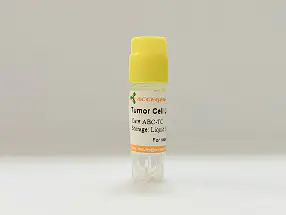
For research use only
| Cat No. | ABC-TC0182 |
| Product Type | Human Lung Cancer Cell Lines |
| Cell Type | Epithelial |
| Species | Human |
| Growth Conditions | 37 ℃, 5% CO2 |
| Source Organ | Lung |
| Disease | Lung Small Cell Cancer |
| Product Code | CORL303; COR L303 |
COR-L303 cell line is a human small cell lung carcinoma model used in cancer research and exploring tumor progression and signaling pathways.
COR-L303 cell line was isolated from a female patient of unknown age with small cell lung carcinoma. The sample was taken pre-therapy. COR-L303 cells grow as very large clumps (aggregates) in suspension, with a slow growth rate. They model metastatic progression through upregulated MMP secretion and angiogenesis. Studies show these cells are implicated in non-small cell lung cancer (NSCLC) research, particularly for investigating molecular mechanisms related to metastasis and cellular responses. Each lot undergoes rigorous screening and isolation procedures, and is rigorously tested to ensure it is free of contamination from HIV-1, HBV, HCV, Syphilis, Mycoplasma, Fungi, Yeast, and Bacteria.
| Product Code | CORL303; COR L303 |
| Species | Human |
| Cat.No | ABC-TC0182 |
| Product Category | Tumor Cell Lines |
| Size/Quantity | 1 vial |
| Cell Type | Epithelial |
| Growth Mode | Suspension |
| Shipping Info | Dry Ice |
| Growth Conditions | 37 ℃, 5% CO2 |
| Source Organ | Lung |
| Disease | Lung Small Cell Cancer |
| Biosafety Level | 1 |
| Storage | Liquid Nitrogen |
| Product Type | Human Lung Cancer Cell Lines |
COR-L303 can be used to study cellular responses and molecular pathways in SCLC research. Researchers can investigate mechanisms underlying cellular resistance, stress responses, and pathway modulation in vitro. It also supports studies of tumor growth, invasion, and metastasis in experimental models, providing insights into tumor biology and cellular interactions.
When you publish your research, please cite our product as “AcceGen Biotech Cat.# XXX-0000”. In return, we’ll give you a $200 coupon. Simply click here and submit your paper’s PubMed ID (PMID).