



For research use only
| Cat No. | ABC-TC521S |
| Product Type | Human Lung Cancer Cell Lines |
| Cell Type | Epithelial |
| Species | Human |
| Growth Conditions | 37 ℃, 5% CO2 |
| Source Organ | Lung |
| Disease | Adenocarinoma |
| Product Code | H1975; H-1975; NCIH1975 |
H1975 is a human NSCLC line with EGFR L858R/T790M and TP53 mutations, adherent growth, tumorigenic, used for EGFR-driven cancer and drug resistance.
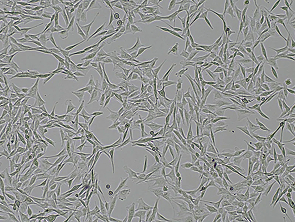
H1975 [H-1975, H1975] is a cell line exhibiting epithelial morphology that was isolated in 1988 from the lungs of a nonsmoking female with non-small cell lung cancer. It exhibits epithelial-like morphology characterized by polygonal, adherent cells that grow as monolayers under standard culture conditions. Cytogenetically, H1975 harbors multiple genetic alterations, notably two activating mutations in the epidermal growth factor receptor (EGFR) gene: L858R and the T790M resistance mutation. Additionally, it carries mutations in the tumor suppressor gene TP53, contributing to its malignant phenotype. These genetic features make H1975 a robust model for studying EGFR-driven tumorigenesis and mechanisms of acquired resistance to EGFR-targeted therapies. The cell line forms tumors when implanted subcutaneously in immunodeficient mice, demonstrating its tumorigenic potential. Overall, H1975 is widely used for research into lung cancer biology, targeted drug development, and resistance mechanisms associated with EGFR mutations.
| Product Code | H1975; H-1975; NCIH1975 |
| Species | Human |
| Cat.No | ABC-TC521S |
| Product Category | Tumor Cell Lines |
| Size/Quantity | 1 vial |
| Cell Type | Epithelial |
| Growth Mode | Adherent |
| Shipping Info | Dry Ice |
| Growth Conditions | 37 ℃, 5% CO2 |
| Source Organ | Lung |
| Disease | Adenocarinoma |
| Biosafety Level | 1 |
| Storage | Liquid Nitrogen |
| Product Type | Human Lung Cancer Cell Lines |
H1975 is a widely used model in immuno-oncology and lung cancer research, particularly for investigating epidermal growth factor receptor (EGFR) mutation-driven tumorigenesis and TKI resistance mechanisms. Its dual EGFR mutations make it an ideal platform for preclinical evaluation of EGFR tyrosine kinase inhibitors and combination therapies aiding in the development of strategies to overcome this resistance. Additionally, they are employed in 3D cell culture models, xenograft models, and immune-oncology research to assess drug responses in a physiologically relevant context. Therefore, H1975 remains a cornerstone in development of potential therapeutic interventions for EGFR-mutant NSCLC.
When you publish your research, please cite our product as “AcceGen Biotech Cat.# XXX-0000”. In return, we’ll give you a $200 coupon. Simply click here and submit your paper’s PubMed ID (PMID).