



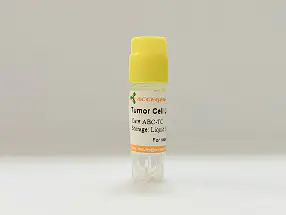
For research use only
| Cat No. | ABL-TC0248 |
| Product Type | Human Leukemia Cell Lines |
| Cell Type | Lymphocyte-like |
| Species | Human |
| Growth Conditions | 37 ℃, 5% CO2 |
| Source Organ | Peripheral Blood |
| Product Code | Hel; Human ErythroLeukemia |
HEL cells carry mutations driving erythroid malignancy,express key surface markers, are used to investigate blood cancer development and gene regulation.
HEL is a human erythroleukemia cell line establishedfrom the peripheral blood of a 30-year-old Caucasian male who developed acute erythroleukemia (FAB-M6 subtype) as a therapy-related myeloid neoplasm (t-MN) following treatment for Hodgkin’s lymphoma. These cells exhibit proerythroblast-like morphology and grow predominantly in suspension, although a subset may demonstrates semi-adherent properties in culture. The HEL cell line, derived from a therapy-related erythroleukemia, carries the JAK2 V617F driver mutation characteristic of Philadelphia-negative myeloproliferative neoplasms and co-expresses markers of multiple lineages including myeloid (CD13, CD33), megakaryocytic (CD41a), and erythroid (CD71, CD235a) antigens along with HLA class I molecules (A3, Aw32, Bw35). This biphenotypic cell line demonstrates tumorigenic potential in immunodeficient mice. Its retention of partial erythroid differentiation capacity distinguishes it from other leukemia cell lines.
| Product Code | Hel; Human ErythroLeukemia |
| Species | Human |
| Cat.No | ABL-TC0248 |
| Product Category | Tumor Cell Lines |
| Size/Quantity | 1 vial |
| Cell Type | Lymphocyte-like |
| Shipping Info | Dry Ice |
| Growth Conditions | 37 ℃, 5% CO2 |
| Source Organ | Peripheral Blood |
| Biosafety Level | 1 |
| Storage | Liquid Nitrogen |
| Product Type | Human Leukemia Cell Lines |
HEL cells serve as a versatile model for investigating the mechanisms governing erythroid lineage differentiation and the regulation of globin gene expression. They serve as a valuable tool for assessing potential therapeutic interventions targeting erythroleukemia, including strategies aimed at modulating JAK-STAT signaling. Given the presence of the JAK2 V617F mutation, HEL cells contribute significantly in dissecting the molecular pathways implicated in myeloproliferative neoplasms, aiding in the development of targeted therapies. Furthermore, it provide a robust model for drug screening, signal transduction studies, and understanding the hematopoietic effects of various pharmacologic agents.
When you publish your research, please cite our product as “AcceGen Biotech Cat.# XXX-0000”. In return, we’ll give you a $200 coupon. Simply click here and submit your paper’s PubMed ID (PMID).