



For research use only
| Cat No. | ABC-TC3604 |
| Product Type | Keratinocyte |
| Cell Type | Keratinocyte |
| Species | Human |
| Growth Conditions | 37 ℃, 5% CO2 |
| Source Organ | Epidermal |
| Disease | Normal |
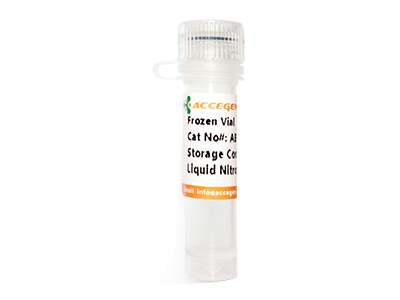
| Storage | Liquid Nitrogen |
Human Epidermal Keratinocytes, Adult enable skin barrier research, wound healing assays, differentiation studies, and dermatology drug screening.
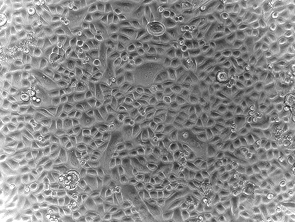
Human Epidermal Keratinocytes are primary epithelial cells isolated from adult human skin and cryopreserved following initial culture. These cells exhibit polygonal morphology and adherent growth and are primarily located in the basal and suprabasal layers of the epidermis. They express key keratinocyte markers such as keratin 5 (KRT5) and keratin 14 (KRT14), which play crucial roles in regulating proliferation and differentiation. Human Epidermal Keratinocytes are essential for forming and maintaining the skin’s protective barrier and actively respond to environmental challenges such as UV radiation, oxidative stress, and inflammatory stimuli. Dysregulation of these cells is implicated in skin disorders including psoriasis, eczema, and non-melanoma skin cancers. They serve as valuable in vitro models for studying wound healing, barrier function, and epidermal responses to pharmacological agents. To maintain cell viability, repeated freeze-thaw cycles should be avoided.
| Species | Human |
| Cat.No | ABC-TC3604 |
| Product Category | Primary Cells |
| Size/Quantity | 1 vial |
| Cell Type | Keratinocyte |
| Growth Mode | Adherent |
| Shipping Info | Dry Ice |
| Growth Conditions | 37 ℃, 5% CO2 |
| Source Organ | Epidermal |
| Disease | Normal |
| Biosafety Level | 1 |
| Storage | Liquid Nitrogen |
| Product Type | Keratinocyte |
| Quality Control | All cells test negative for mycoplasma, bacteria, yeast, and fungi. |
Adult human epidermal keratinocytes are widely used in skin-related research. They are key tools for studying toxicology, wound repair, UV damage, skin cancer, psoriasis, eczema, viral infections, gene delivery, and cosmetic applications. When cultured on inserts at a liquid-air interface, these cells can differentiate into a stratified squamous epithelium, making them ideal for constructing physiologically relevant in vitro skin models.
When you publish your research, please cite our product as “AcceGen Biotech Cat.# XXX-0000”. In return, we’ll give you a $200 coupon. Simply click here and submit your paper’s PubMed ID (PMID).