



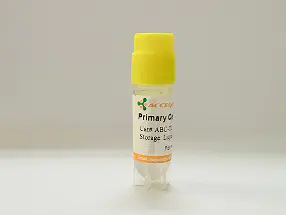
For research use only
| Cat No. | ABC-TC3456 |
| Product Type | Melanocyte |
| Cell Type | Melanocyte |
| Species | Human |
| Growth Conditions | 37 ℃, 5% CO2 |
| Source Organ | Epidermal |
| Disease | Normal |
| Storage | Liquid Nitrogen |
Utilize Human Epidermal Melanocytes, Adult to model pigmentation biology, dermal responses, and compound testing in low serum, toxin-free systems.
Human Epidermal Melanocytes, Adult are primary cells derived from the adult epidermal tissue. They exhibit a characteristic dendritic or stellate morphological structure, with the cell body located in the basal layer of the epidermis and dendrites extending into the layer of keratinocytes. They exhibit tyrosinase activity, as evidenced by L-Dopa oxidation. The core function of these cells is to synthesize melanin and transport it to keratinocytes, thereby forming an epidermal pigment barrier to protect against UV-induced DNA damage. They serve as an important model for studying melanocyte disorders and the molecular mechanisms underlying skin color variation. Each lot undergoes rigorous screening and isolation procedures, and is rigorously tested to ensure it is free of contamination from HIV-1, HBV, HCV, Syphilis, Mycoplasma, Fungi, Yeast, and Bacteria.
| Product Code | Human Adult Epidermal Melanocytes, Adult Human Melanocytes, NHEM-Ad, Human Skin Melanocytes Adult, Epidermal Melanocytes Adult |
| Species | Human |
| Cat.No | ABC-TC3456 |
| Product Category | Primary Cells |
| Size/Quantity | 1 vial |
| Cell Type | Melanocyte |
| Growth Mode | Adherent |
| Shipping Info | Dry Ice |
| Growth Conditions | 37 ℃, 5% CO2 |
| Source Organ | Epidermal |
| Disease | Normal |
| Biosafety Level | 1 |
| Storage | Liquid Nitrogen |
| Product Type | Melanocyte |
| Quality Control | All cells test negative for mycoplasma, bacteria, yeast, and fungi. |
Human Epidermal Melanocytes, Adult can be used to study melanin synthesis, pigment metabolism regulation, and melanocyte biology, which helps to investigate the mechanisms of pigmentary disorders. They can also be used to screen and evaluate the effects of cosmetic raw materials, such as whitening agents and UV-protective compounds, on melanocyte function in vitro, and for in vitro studies of compounds affecting melanocyte growth, survival, or pigmentation.
When you publish your research, please cite our product as “AcceGen Biotech Cat.# XXX-0000”. In return, we’ll give you a $200 coupon. Simply click here and submit your paper’s PubMed ID (PMID).