



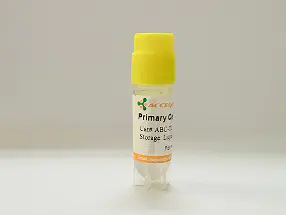
For research use only
| Cat No. | ABC-TC3967 |
| Product Type | Hepatic Cells |
| Cell Type | Parenchymal Cell |
| Species | Human |
| Growth Conditions | 37 ℃, 5% CO2 |
| Disease | Normal |
| Storage | Liquid Nitrogen |
AcceGen offers an assortment of various human and non-human hepatic derived cells. These include Hepatocytes, Total Liver Cell Population (TLC), Stellates, Progenitors and Intra-hepatic biliary epithelial cells.
Human Non-Parenchymal Cells include hepatic stellate cells, liver progenitor cells, and intrahepatic bile duct epithelial cells. These cells are isolated from human liver tissue, cultured under primary conditions, and cryopreserved after harvesting. They express UEA-1, αSMA, and CD45. Non-parenchymal cells play critical roles in liver regeneration, immune surveillance, and the metabolism of various compounds. Studies have shown that they contribute to hepatic repair by regulating hepatocyte proliferation and extracellular matrix production. Additionally, these cells are involved in drug metabolism and may play a role in drug-induced liver injury (DILI). In vitro, Human Non-Parenchymal Cells display limited proliferative capacity. Repeated freeze-thaw cycles should be avoided to preserve cellular function and viability. The cells undergo rigorous screening and isolation procedures, and are rigorously tested to ensure they are free of contamination from HIV-1, HBV, HCV, Syphilis, Mycoplasma, Fungi, Yeast, and Bacteria.
| Product Code | HNPC |
| Species | Human |
| Cat.No | ABC-TC3967 |
| Product Category | Primary Cells |
| Size/Quantity | 1 vial |
| Cell Type | Parenchymal Cell |
| Growth Mode | Adherent |
| Shipping Info | Dry Ice |
| Growth Conditions | 37 ℃, 5% CO2 |
| Disease | Normal |
| Biosafety Level | 1 |
| Storage | Liquid Nitrogen |
| Product Type | Hepatic Cells |
| Quality Control | All cells test negative for mycoplasma, bacteria, yeast, and fungi. |
Human Non-Parenchymal Cells are utilized for modeling hepatic inflammation, fibrosis, and regeneration. These cells provide essential insights into drug-induced liver injury (DILI), hepatic stellate cell activation, and bile duct pathologies. Their role in modulating hepatocyte function makes them a vital component in liver-on-chip platforms, hepatotoxicity testing, and regenerative therapy design.
When you publish your research, please cite our product as “AcceGen Biotech Cat.# XXX-0000”. In return, we’ll give you a $200 coupon. Simply click here and submit your paper’s PubMed ID (PMID).