



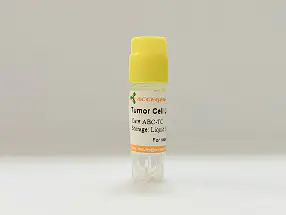
For research use only
| Cat No. | ABC-TC0461 |
| Product Type | Human Lung Cancer Cell Lines |
| Species | Human |
| Growth Conditions | 37 ℃, 5% CO2 |
| Source Organ | Lung |
| Disease | Lung Small Cell Cancer |
| Product Code | ISTSL2 |
Species: human male; Tissue: lung; Tumor: carcinoma, small cell; Derived from: pleural effusion
IST-SL2 is a human small-cell lung carcinoma tumor cell line originally derived from metastatic pleural effusion of a patient with aggressive small-cell lung cancer. It exhibits adherent or semi-adherent epithelial-like morphology in standard culture. IST SL2 SCLC cell line is microsatellite stable (MSS). It carries key driver mutations including RB1 frameshift mutation (p.Tyr424Ilefs*4) and TP53 stop-gain mutation (p.Glu294Ter), which are common in small-cell lung carcinoma and reflect loss of tumor suppressor functions in this malignancy. These alterations underpin its aggressive phenotype and relevance as a tumor model for SCLC biology and therapeutic studies. The cells undergo rigorous screening and isolation procedures, and are rigorously tested to ensure they are free of contamination from HIV-1, HBV, HCV, Syphilis, Mycoplasma, Fungi, Yeast, and Bacteria.
| Product Code | ISTSL2 |
| Species | Human |
| Cat.No | ABC-TC0461 |
| Product Category | Tumor Cell Lines |
| Size/Quantity | 1 vial |
| Shipping Info | Dry Ice |
| Growth Conditions | 37 ℃, 5% CO2 |
| Source Organ | Lung |
| Disease | Lung Small Cell Cancer |
| Biosafety Level | 1 |
| Storage | Liquid Nitrogen |
| Product Type | Human Lung Cancer Cell Lines |
IST-SL2 cells are used as an in vitro model of human small-cell lung carcinoma for investigating tumor cell proliferation, RB1/TP53-associated oncogenic signaling pathways, and drug sensitivity profiling. They support research into mechanisms of chemoresistance, signal transduction, and preclinical evaluation of anticancer agents relevant to aggressive lung cancer biology.
When you publish your research, please cite our product as “AcceGen Biotech Cat.# XXX-0000”. In return, we’ll give you a $200 coupon. Simply click here and submit your paper’s PubMed ID (PMID).