- In-Stock Tumor Cell Lines
- Human Orbital Fibroblasts
- Human Microglia
- Human Pulmonary Alveolar Epithelial Cells
- Human Colonic Fibroblasts
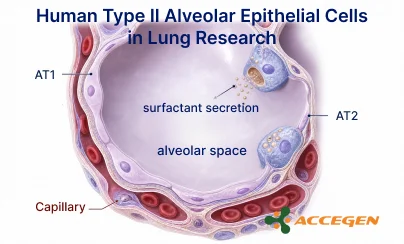
- Human Type II Alveolar Epithelial Cells
- Human Valvular Interstitial Cells
- Human Thyroid Epithelial Cells
- C57BL/6 Mouse Dermal Fibroblasts
- Human Alveolar Macrophages
- Human Dermal Fibroblasts, Adult
- Human Lung Fibroblasts, Adult
- Human Retinal Muller Cells
- Human Articular Chondrocytes
- Human Retinal Pigment Epithelial Cells
- Human Pancreatic Islets of Langerhans Cells
- Human Kidney Podocyte Cells
- Human Renal Proximal Tubule Cells
A New Focus: From Simple Cells to Complex Systems
Recent advances in organoid models and 3D cell culture technologies are rapidly reshaping how disease models are built. Instead of relying on oversimplified cell systems, researchers are now developing models that better mimic real human tissues. In particular, epithelial cell-derived organoids have gained significant attention, as they can recapitulate tissue architecture, cellular interactions, and disease-specific features with much higher accuracy.
More importantly, emerging studies highlight that epithelial cell heterogeneity is not just a detail, but a defining factor in disease progression and therapeutic response. Different epithelial subtypes can play distinct roles in immunity, infection defense, and tissue remodeling, which directly impacts how diseases are modeled and understood.
Why Epithelial Cells Are Now at the Center
This shift explains why epithelial cells have become central to next-generation disease models. As the primary interface between the body and the external environment, they are deeply involved in key biological processes such as inflammation, host–pathogen interactions, and barrier function.
In practical research scenarios, epithelial cells are essential because they enable:
- More physiologically relevant disease modeling
- Better simulation of host–pathogen interactions
- Improved prediction of drug response
- Reconstruction of tissue-specific microenvironments
However, this also introduces a critical challenge. As models become more complex, the reliance on cell quality increases. Variability in epithelial cell source, purity, or growth behavior can directly affect experimental reproducibility and data reliability—often underpinning inconsistent or irreproducible results.
From Research Trend to Practical Needs
As organoid systems and epithelial-driven models continue to evolve, one thing is becoming increasingly clear: advanced models cannot compensate for poor starting materials. High-quality primary epithelial cells are no longer optional—they are foundational.
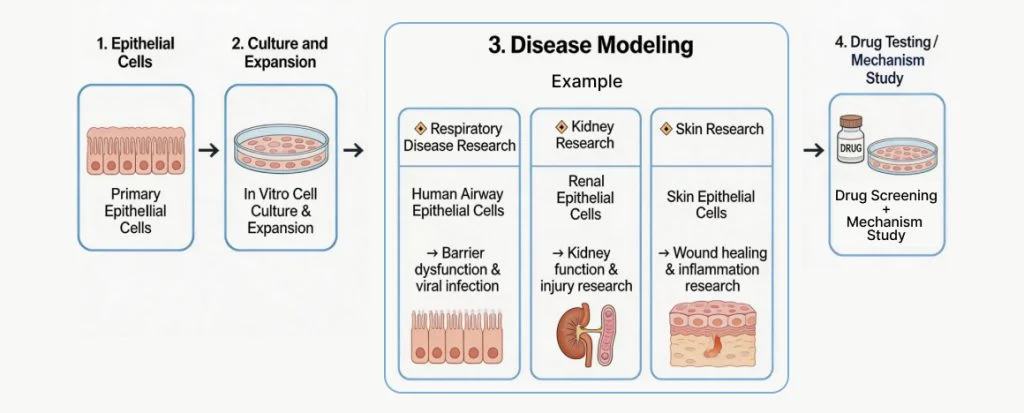
In applications such as respiratory disease research, human airway epithelial cells are widely used to investigate barrier dysfunction and viral infection, including mechanisms related to symptoms of viral infection and disease progression. In kidney research, renal epithelial cells provide relevant systems for functional and injury studies. Skin-derived epithelial cells are equally critical in wound healing and inflammatory responses, supporting investigations into the wound healing process and tissue repair dynamics. Across all these applications, the common requirement is consistency—cells that are well-characterized, contamination-free, and stable across experiments.
For researchers working at the forefront of disease modeling, access to reliable epithelial cell sources directly determines whether a model is merely functional or truly predictive. This is why increasing attention is being placed on standardized primary epithelial cells that can support reproducible and translational research outcomes.
Supporting Advanced Models with Reliable Cell Sources
As disease models continue to move toward higher complexity and clinical relevance, the role of epithelial cells will only become more central. Whether in organoid models, drug screening platforms, or mechanistic studies, the quality of the cellular foundation ultimately defines the value of the research output.

Copyright - Unless otherwise stated all contents of this website are AcceGen™ All Rights Reserved – Full details of the use of materials on this site please refer to AcceGen Editorial Policy – Guest Posts are welcome, by submitting a guest post to AcceGen you are agree to the AcceGen Guest Post Agreement – Any concerns please contact marketing@accegen.com