- In-Stock Tumor Cell Lines
- Human Orbital Fibroblasts
- Human Microglia
- Human Pulmonary Alveolar Epithelial Cells
- Human Colonic Fibroblasts
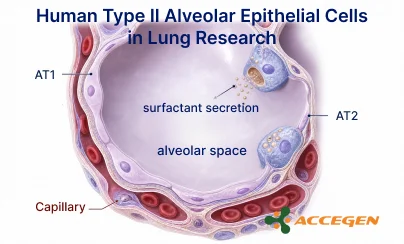
- Human Type II Alveolar Epithelial Cells
- Human Valvular Interstitial Cells
- Human Thyroid Epithelial Cells
- C57BL/6 Mouse Dermal Fibroblasts
- Human Alveolar Macrophages
- Human Dermal Fibroblasts, Adult
- Human Lung Fibroblasts, Adult
- Human Retinal Muller Cells
- Human Articular Chondrocytes
- Human Retinal Pigment Epithelial Cells
- Human Pancreatic Islets of Langerhans Cells
- Human Kidney Podocyte Cells
- Human Renal Proximal Tubule Cells
What is IgA nephropathy?
IgA Nephropathy (IgAN) is one of the most common forms of primary glomerulonephritis worldwide, yet its underlying immune mechanisms remain only partially elucidated.
Understanding the IgA nephropathy pathogenesis is critical for advancing both basic research and therapeutic development. Characterized by IgA deposition in renal glomeruli, this disease often progresses asymptomatically until significant renal damage develops. Despite years of research, one major challenge persists: how to accurately study immune dysfunction in a clinically relevant system. This is precisely where human PBMCs isolated from IgA nephropathy patients prove highly valuable.
Why Immune Cells Matter in IgA Nephropathy?
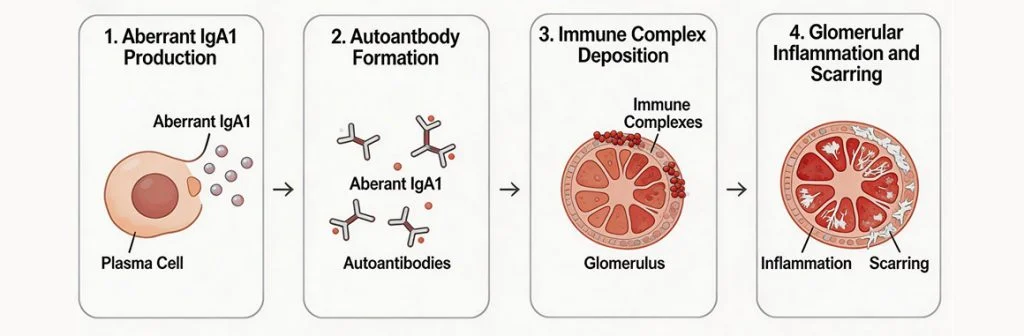
At its core, IgA nephropathy is not just a kidney disease—it is an immune disorder. A key feature in the pathogenesis of IgA nephropathy involves abnormal production of IgA1 molecules with altered glycosylation patterns. These aberrant IgA molecules trigger immune activation, which is part of the broader IgA nephropathy pathogenesis cascade, leading to:
- Formation of immune complexes
- Activation of circulating immune cells
- Inflammatory responses in renal tissues
Peripheral blood mononuclear cells (human PBMCs), including T cells, B cells, and monocytes, play a central role in this process. They reflect systemic immune dysregulation and serve as a direct window into disease activity. In simple terms: If you want to understand IgAN, you have to understand the immune cells behind it.
Linking Pathogenesis to Experimental Models
The complexity of the IgA nephropathy pathogenesis diagram highlights multiple immune interactions that cannot be fully replicated in simplified systems. This makes patient-derived human PBMCs more reliable models compared to traditional approaches.
Why Use IgA Nephropathy PBMCs?
Traditional models often rely on cell lines or animal systems. While useful, they fail to fully capture patient-specific immune characteristics. Human PBMCs isolated from IgA nephropathy patients offer several clear advantages:
1. Disease Relevance: These cells preserve real immune signatures associated with IgAN.
2. Functional Insight: They allow researchers to study
- Cytokine production
- Immune cell activation
- Cell-to-cell interactions
3. Translational Value
PBMC-based studies bridge the gap between basic research and clinical application.
From Sample to Study: PBMC Isolation
Reliable results depend on standardized sample preparation.
Techniques such as PBMC isolation and optimized PBMC isolation protocol ensure high-quality human PBMCs for downstream applications.
Key Research Applications
Using PBMCs from IgA nephropathy patients, researchers can investigate key aspects of the disease’s biological mechanisms:
- Immune Mechanism Studies: Analyze how immune imbalance contributes to disease progression
- Biomarker Discovery: Identify circulating immune signatures
- Drug Screening: Evaluate immunomodulatory compounds
- Ex Vivo Functional Assays: Test immune responses under controlled conditions
Understanding the IgA nephropathy pathogenesis requires more than observing kidney pathology—it demands insight into the immune system driving the disease. Human PBMCs from IgA nephropathy patients provide a powerful, clinically relevant tool to uncover these mechanisms. By enabling direct access to patient-derived immune cells, they support more accurate research, better biomarker discovery, and more effective therapeutic development. In a field where complexity often limits progress, using the right model system can make all the difference.

Copyright - Unless otherwise stated all contents of this website are AcceGen™ All Rights Reserved – Full details of the use of materials on this site please refer to AcceGen Editorial Policy – Guest Posts are welcome, by submitting a guest post to AcceGen you are agree to the AcceGen Guest Post Agreement – Any concerns please contact marketing@accegen.com