



For research use only
| Cat No. | ABC-TC0001 |
| Product Type | Human Leukemia Cell Lines |
| Cell Type | Lymphoblast |
| Species | Human |
| Growth Conditions | 37 ℃, 5% CO2 |
| Source Organ | Blood |
| Disease | Acute Lymphoblastic Leukemia |
| Product Code | Cell 1301, 1301 cell |
Advance telomere research using 1301 cells, a human T-cell leukemia line with long telomeres ideal for telomere length-based assays and controls.
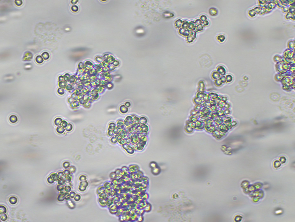
1301 is a human T cell line derived from the peripheral blood of a patient with acute lymphoblastic leukemia (ALL). It is classified as a subline of the CCRF-CEM lineage, originally established from a 4-year-old Caucasian female. The cells display lymphoblastic morphology, with large round nuclei, scant cytoplasm, and grow in suspension culture as single cells or small clusters. 1301 cells exhibit abnormally long telomeres, making them a distinct model for studying telomere biology and genomic stability. Cytogenetic analysis indicates aneuploid karyotypes with characteristic chromosomal aberrations. These cells do not exhibit spontaneous differentiation and are tumorigenic in immunocompromised mouse models, forming infiltrative leukemic masses. The cells undergo rigorous screening and isolation procedures, and are rigorously tested to ensure they are free of contamination from HIV-1, HBV, HCV, Syphilis, Mycoplasma, Fungi, Yeast, and Bacteria.
| Product Code | Cell 1301, 1301 cell |
| Species | Human |
| Cat.No | ABC-TC0001 |
| Product Category | Tumor Cell Lines |
| Size/Quantity | 1 vial |
| Cell Type | Lymphoblast |
| Growth Mode | Suspension |
| Shipping Info | Dry Ice |
| Growth Conditions | 37 ℃, 5% CO2 |
| Source Organ | Blood |
| Disease | Acute Lymphoblastic Leukemia |
| Biosafety Level | 1 |
| Storage | Liquid Nitrogen |
| Product Type | Human Leukemia Cell Lines |
1301 cells serve as a valuable model for investigating T-cell acute lymphoblastic leukemia, particularly in studies focused on telomere length regulation, leukemogenesis, and T-cell signaling. Due to their consistent telomere phenotype, they are widely used as control cells in telomerase activity assays and telomere length quantification. Additionally, 1301 cells are suitable for preclinical drug screening, cytotoxicity analysis, and studies of apoptosis or DNA repair in lymphoid malignancies.
When you publish your research, please cite our product as “AcceGen Biotech Cat.# XXX-0000”. In return, we’ll give you a $200 coupon. Simply click here and submit your paper’s PubMed ID (PMID).