



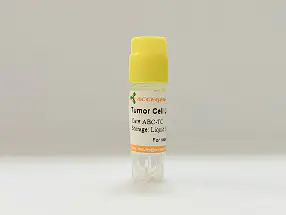
Tumor Cell Lines

CEM-CM3

  • For research use only

Cat No.

ABC-TC0129

Product Type

Human Leukemia Cell Lines

Cell Type

T cell

Species

Human

Growth Conditions

37 ℃, 5% CO2

Source Organ

Peripheral Blood

Disease

Acute Lymphoblastic Leukemia

Product Code

CCRF-CEM C3; CEM-C3; CEM/C3; CEMC3

Discover the CEM-CM3 cell line, a vital tool for cancer research, offering insights into therapeutic responses and cellular mechanisms in oncology studies.

Product Image

Description

CEM‑CM3 is a human T‑lymphoblastoid cell line derived in situ from the peripheral blood of a 4‑year‑old with childhood T‑cell acute lymphoblastic leukemia (T‑ALL), selected from the parental CCRF‑CEM cell line for 8‑azaguanine resistance. The cells grow in suspension, exhibiting lymphoblast morphology. Cytogenetically, they retain a diploid modal chromosome number and carry mutations in FBXW7 (p.R465C), FLT3 (p.A627T), KRAS (p.G12D), NOTCH1 (insertions and point mutations), and TP53 (p.R175H, p.R248Q). STR profiling confirms authenticity. Used historically as fusion partners in hybridoma production, the line is non‑tumorigenic in nude mice. Gene expression mirrors T‑cell lineage with active TCR signaling. The cells undergo rigorous screening and isolation procedures, and are rigorously tested to ensure they are free of contamination from HIV-1, HBV, HCV, syphilis, mycoplasma, fungi, yeast, and bacteria.

Product Code

CCRF-CEM C3; CEM-C3; CEM/C3; CEMC3

Species

Human

Cat.No

ABC-TC0129

Product Category

Tumor Cell Lines

Size/Quantity

1 vial

Cell Type

T cell

Growth Mode

Suspension

Shipping Info

Dry Ice

Growth Conditions

37 ℃, 5% CO2

Source Organ

Peripheral Blood

Disease

Acute Lymphoblastic Leukemia

Biosafety Level

1

Storage

Liquid Nitrogen

Product Type

Human Leukemia Cell Lines

Application

  • CEM‑CM3 serves as a versatile T‑ALL research model, especially well-suited for studies on chemoresistance due to its 8‑azaguanine resistance phenotype. It is widely used to examine oncogenic signaling pathways involving KRAS, NOTCH1, FLT3, and TP53 mutations. Its historical role as a hybridoma fusion partner makes it useful in antibody production and immunotherapy assay development. The cell line supports drug screening, cytotoxicity testing, and functional genomics, including studies of apoptosis and DNA damage response influenced by its TP53 status.

Citation

When you publish your research, please cite our product as “AcceGen Biotech Cat.# XXX-0000”. In return, we’ll give you a $200 coupon. Simply click here and submit your paper’s PubMed ID (PMID).

Inquiring CEM-CM3

We know how valuable your research is to you, but are you wondering what you can expect to pay for quick accurate results every time? Fill out a request in the form below and we’ll get back to you within 24 hours with a quote.
High Viability
To succeed in cell culture
Precision and Reliability
To support a consistent result
Customization Options
Tailed to your research

Tags

AcceGen Scroll Top Button