



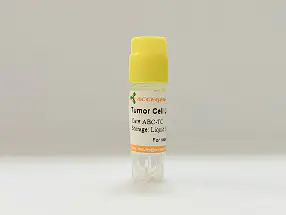
For research use only
| Cat No. | ABC-TC0125 |
| Product Type | Human Leukemia Cell Lines |
| Cell Type | Lymphoblast |
| Species | Human |
| Growth Conditions | 37 ℃, 5% CO2 |
| Source Organ | Blood |
| Disease | Acute Lymphoblastic Leukemia |
| Product Code | CCRF/CEM; CCRFCEM; CCRF.CEM; CCRF CEM; CCRF; CEM; CEM-CCRF; CEM-CCRF (CAMR); CCRF/CEM/0; CEM/0; CEM-0; CCRF-CEM/S |
Organ: peripheral blood Disease: acute lymphoblastic leukemia Cell Type: T lymphoblast;
CCRF-CEM is a human T lymphoblastoid cell line derived from the peripheral blood of a 4-year-old Caucasian female patient diagnosed with acute lymphoblastic leukemia (ALL). These cells exhibit a lymphoblast morphology and grow in suspension culture. Gene expression profiling indicates that CCRF-CEM cells express high levels of genes involved in cell cycle regulation, apoptosis, and drug resistance pathways. These characteristics make the cell line a valuable model for studying leukemia biology, drug resistance mechanisms, and the effects of chemotherapeutic agents. Although primarily used as an in vitro model, CCRF-CEM cells are also capable of forming leukemic lesions in immunodeficient mice. The cells undergo rigorous screening and isolation procedures, and are rigorously tested to ensure they are free of contamination from HIV-1, HBV, HCV, Syphilis, mycoplasma, fungi, yeast, and bacteria.
| Product Code | CCRF/CEM; CCRFCEM; CCRF.CEM; CCRF CEM; CCRF; CEM; CEM-CCRF; CEM-CCRF (CAMR); CCRF/CEM/0; CEM/0; CEM-0; CCRF-CEM/S |
| Species | Human |
| Cat.No | ABC-TC0125 |
| Product Category | Tumor Cell Lines |
| Size/Quantity | 1 vial |
| Cell Type | Lymphoblast |
| Growth Mode | Suspension |
| Shipping Info | Dry Ice |
| Growth Conditions | 37 ℃, 5% CO2 |
| Source Organ | Blood |
| Disease | Acute Lymphoblastic Leukemia |
| Biosafety Level | 1 |
| Storage | Liquid Nitrogen |
| Product Type | Human Leukemia Cell Lines |
CCRF-CEM cells are widely used in hematological cancer research, particularly for studying T-cell acute lymphoblastic leukemia. They provide a robust in vitro model for investigating leukemic cell proliferation, signaling pathways, and apoptosis. The cell line is also ideal for screening novel chemotherapeutic agents, studying drug resistance, and testing targeted therapies. Their well-characterized immunophenotype makes them valuable for immunological studies and the development of T-cell-directed treatments.
When you publish your research, please cite our product as “AcceGen Biotech Cat.# XXX-0000”. In return, we’ll give you a $200 coupon. Simply click here and submit your paper’s PubMed ID (PMID).