



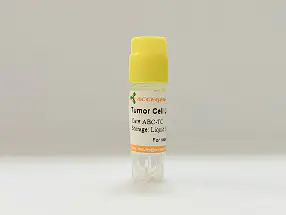
For research use only
| Cat No. | ABC-TC0499 |
| Product Type | Human Leukemia Cell Lines |
| Cell Type | Lymphoblast |
| Species | Human |
| Growth Conditions | 37 ℃, 5% CO2 |
| Source Organ | Bone Marrow |
| Disease | Acute Myeloid Leukemia |
| Product Code | KG-1A; KG1A; KG1a |
The KG-1A cell line is derived from the KG-1 cell line and is almost identical.
KG-1A is a human acute myeloid leukemia (AML) cell line derived as a non-differentiating subclone of the parental KG-1 line, originally established from the bone marrow of a 59-year-old Caucasian male patient with erythroleukemia that progressed to AML. The cells grow as suspension-cultured myeloblast-like cells with an undifferentiated morphology and lack spontaneous granulocytic or macrophage differentiation capacity. KG-1A cells exhibit markedly reduced or absent responsiveness to colony-stimulating factors, including GM-CSF and M-CSF, and do not express HLA-DR, reflecting a more immature hematopoietic phenotype compared with KG-1. Cytogenetic analyses indicate that KG-1A retains a complex, pseudodiploid karyotype closely related to the parental line, supporting its clonal derivation and genetic stability in long-term culture. The cells undergo rigorous screening and isolation procedures, and are rigorously tested to ensure they are free of contamination from HIV-1, HBV, HCV, Syphilis, Mycoplasma, Fungi, Yeast, and Bacteria.
| Product Code | KG-1A; KG1A; KG1a |
| Species | Human |
| Cat.No | ABC-TC0499 |
| Product Category | Tumor Cell Lines |
| Size/Quantity | 1 vial |
| Cell Type | Lymphoblast |
| Growth Mode | Suspension |
| Shipping Info | Dry Ice |
| Growth Conditions | 37 ℃, 5% CO2 |
| Source Organ | Bone Marrow |
| Disease | Acute Myeloid Leukemia |
| Biosafety Level | 1 |
| Storage | Liquid Nitrogen |
| Product Type | Human Leukemia Cell Lines |
KG-1A is widely used as an in vitro model of immature human AML for studies of early myeloid progenitor biology, leukemic differentiation blockade, and cytokine-independent growth mechanisms. Its stable undifferentiated phenotype makes it suitable for investigating transcriptional regulation, signal transduction pathways involved in leukemogenesis, and preclinical evaluation of differentiation-inducing agents and targeted therapies relevant to acute myeloid leukemia.
When you publish your research, please cite our product as “AcceGen Biotech Cat.# XXX-0000”. In return, we’ll give you a $200 coupon. Simply click here and submit your paper’s PubMed ID (PMID).